
better travel photography.com
phototours with steve davey.
Steve Davey has travelled to Laos many times and seen the country open up to tourism over the course of the last thirty years. As a result of all of this experience he has especially crafted our Impressions of Laos photography tour to take in all of the seven unmissable highlights in this list – as well as countless other memorable experiences.
Laos is an entrancing mix of large significant UNESCO recognised sites – including the whole UNESCO recognised town of Luang Prabang – and
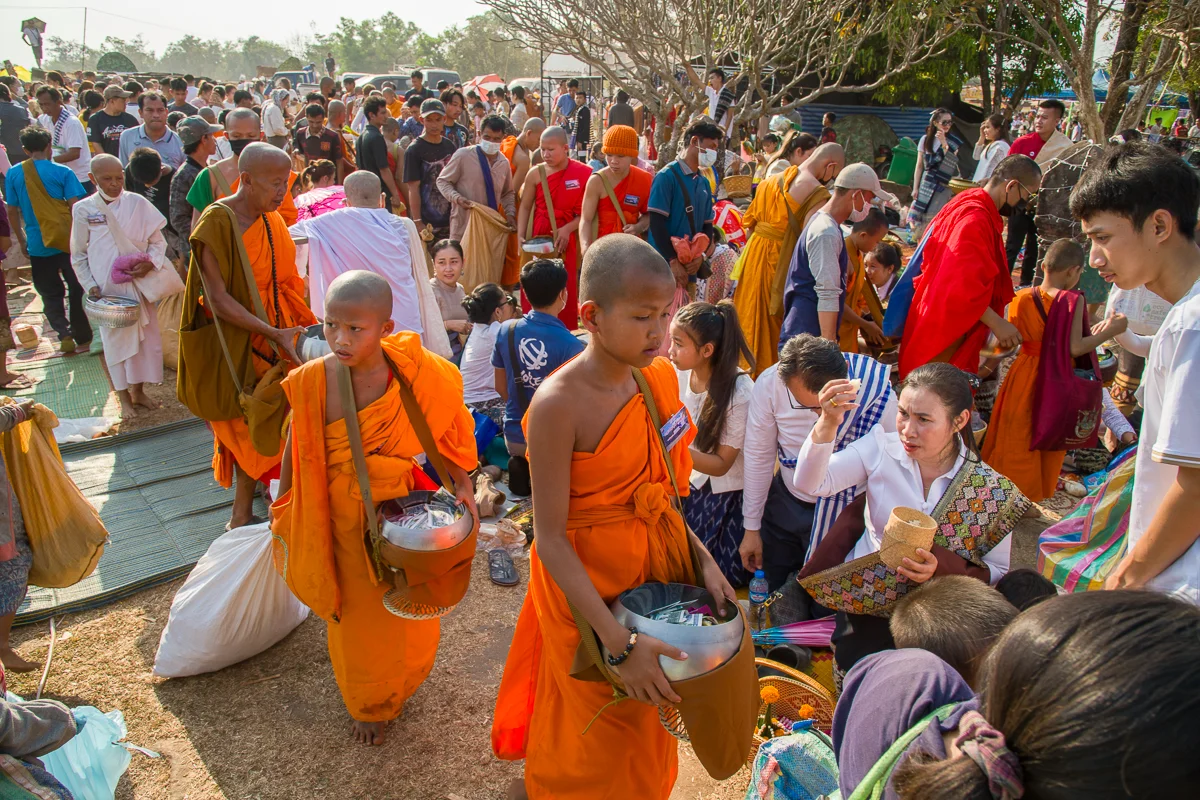
The highlight of this trip is being able to witness the Wat Phou Champassak festival amidst these atmospheric ancient ruins – which date back to when this region was a part of the Khmer Empire, which was centred on Angkor Wat in present day Cambodia.
This unique festival attracts thousands of local pilgrims who climb to the sanctuary at the top of the ruins to make offerings to the Buddha images and then collect water fram a holy spring in a small cave. The following morning there is an especially auspicious monks alms round, where hundreds of monks perform a special Tak Bat, or monks morning alms round.

Lines of the faithful line either side of the stone causeway and the monks walk down the middle collecting so many donations that many of them have their own bag carriers for when their begging bowls are full!
As well as the religious aspects of the festival there are stalls selling local food and clothes, as well as fairground attractions to entertain the local crowds.
The atmosphere is vibrant, lively and welcoming with surprisingly few tourists.
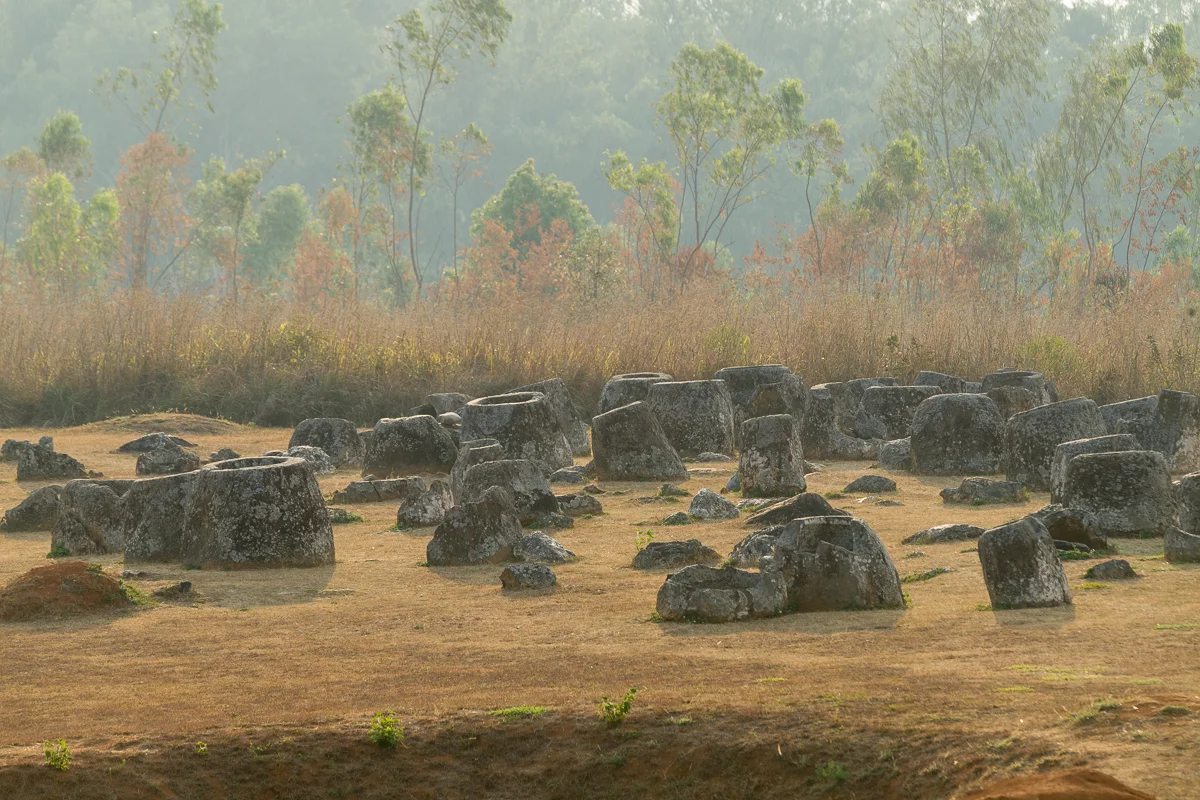
Many tours of Laos never reach the Plain of Jars in the Northeast of the country. In total there are between 2000 and 3000 ancient stone carved jars spread across over 90 sites. Most of the jars are between one and two metres, but the largest Hin Taem is over three metres and weighs between 6 and 10 tonnes.
No one truly knows the origins of these enigmatic jars. They originate from the Iron Age, and are believed to have been made for funerary practices, although there are claims that they were used to ferment rice wine to celebrate a great military victory.
This part of Laos experienced heavy bombing and even battles between the Pathet Lao and Government Loyalist forces during the Indochina war, and as the result only a handful of the sites have been properly cleared of UXO. Even so, you can see great bomb craters and war damage to some of the jars.
As well as exploring a couple of the most impressive Jars sites we will head out to some of the nearby villages to see how the locals put some of the war scrap to use – using cluster bomb cases for fences and even vegetable planters.
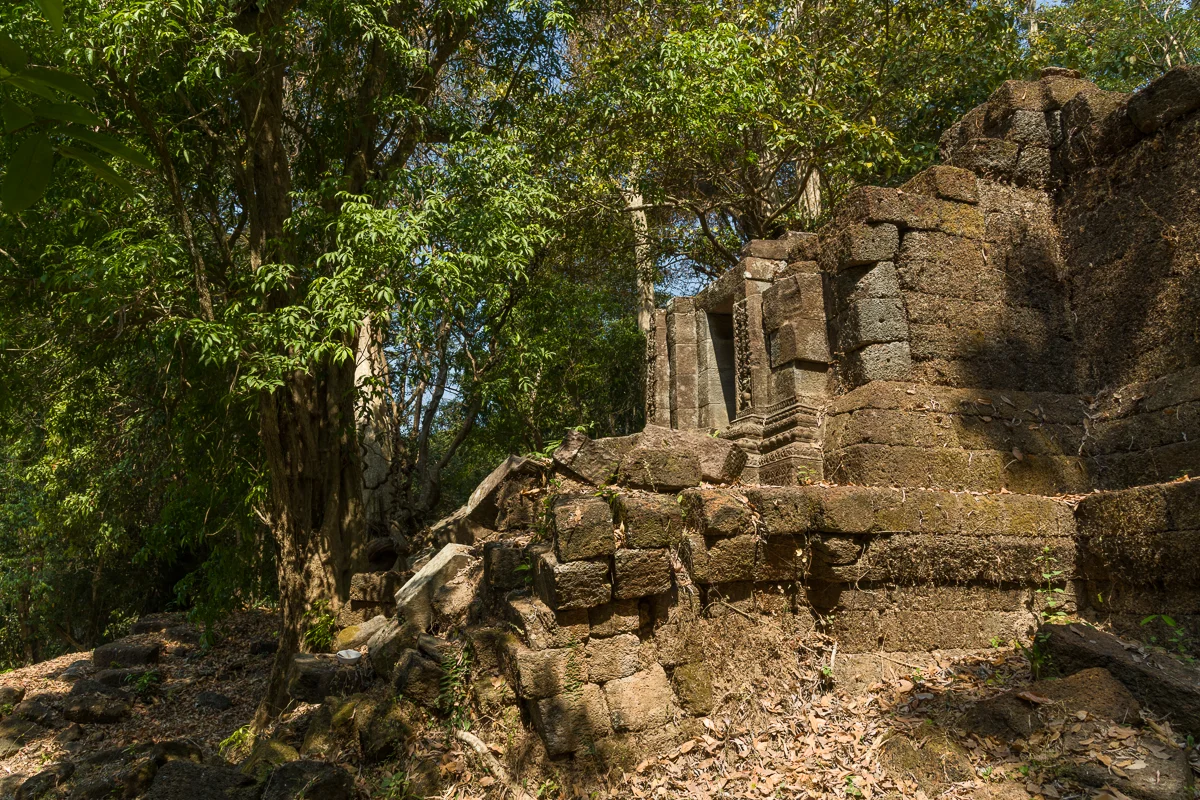
You don't have to travel to Angkor Wat in Cambodia to see ancient Khmer ruins, swallowed by jungle. In the 10th to 12th centuries the Angkorian kingdom expanded into southern Laos and constructed the ruins of Wat Tomo - also known as Oum Moung.
Wat Tomo is a part of the Wat Phou complex, but is across the Mekong River and is seldom visited. The site has been atmospherically been reclaimed by great trees, some of which are growing out of the rocks. This makes it a wonderfully atmospheric place to visit – not least as we will be in Wat Phou Champassak in the middle of a festival and visiting Wat Tomo will allow us to explore will allow us to explore ancient Khmer ruins in solitude and without crowds.

Every morning at dawn you can see saffron-clad monks emerge from every monastery in Laos in silent lines to collect donations from the faithful who wait by the side of the road in an entrancing ritual is known as tak bat.
In the UNESCO recognised town of Luang Prabang in the north of the Laos, you can see more monks carrying out the tak bat than anywhere else in the country. There are 33 active Buddhist monasteries in Luang Prabang and an estimated 1000 monks and novices. each morning many of them will walk in quiet, single-file lines through the old town streets to collect daily food offerings from local residents.
In some parts of the city the tak bat has turned into something of a zoo, with tourists jostling for pictures and getting in the way of the monks. I have been photographing the ritual for many years though and can take you to the best places where you can witness it without the crowds – and see it in the way that it has been performed for generations.
Crucially, you will also be able to see the tak bat, and take pictures in a respectful way which doesn't intrude or offend in anyway – one of the benefits of insider knowledge.
You can see more on photographing the tak bat in Luang Prabang in an ethical way on this link.

Branching out from the Muang Xai in the Oudomxay Province leads into a spectacular landscape of rugged mountains, limestone caves, and hidden waterfalls. We will spend two nights here at the Namkat Yorla Pa Resort, which has its own jungle walkway.
This is an area where there are many traditional Mountain Peoples, and the surrounding valleys offers a rare opportunity to visit traditional Khmu and Hmong communities, where ancient customs and unique textiles remain a vibrant part of daily life, and we will spend some time visiting a number of ethnic villages and meeting local people.

The Khmu are one of the largest indigenous ethnic groups in Laos, primarily residing across the mountainous northern provinces. Their rich spiritual lifestyle revolves around animism, with deep-rooted traditions that dictate building homes aligned with the sun for spiritual protection. They are highly regarded for their rich heritage of oral storytelling, fine bamboo basketry, and the cultivation of sweet, potent rice wine.
The Akha are a Tibeto-Burman speaking group who live in small, high-altitude villages tucked into the rugged peaks of northern Laos. They possess a strikingly distinct cultural identity, most visibly recognised by their elaborate traditional attire adorned with intricate embroidery, vibrant dyes, and heavy silver jewellery. Originally migrating from China in the early 20th century, they maintain a highly independent lifestyle deeply tied to ancestral customs and mountain farming.
The Tai Phuan are a Theravada Buddhist group belonging to the lowland Tai-Kadai ethnolinguistic family. Historically rooted in the central Plain of Jars region where they founded the ancient kingdom of Mueang Phuan, their communities were severely fractured by centuries of forced wartime migrations and slave raids. Today, they are celebrated for preserving a remarkably stable language and for their exceptional artistic traditions, which include master knife-making and weaving intricate pasin tin jok textiles.
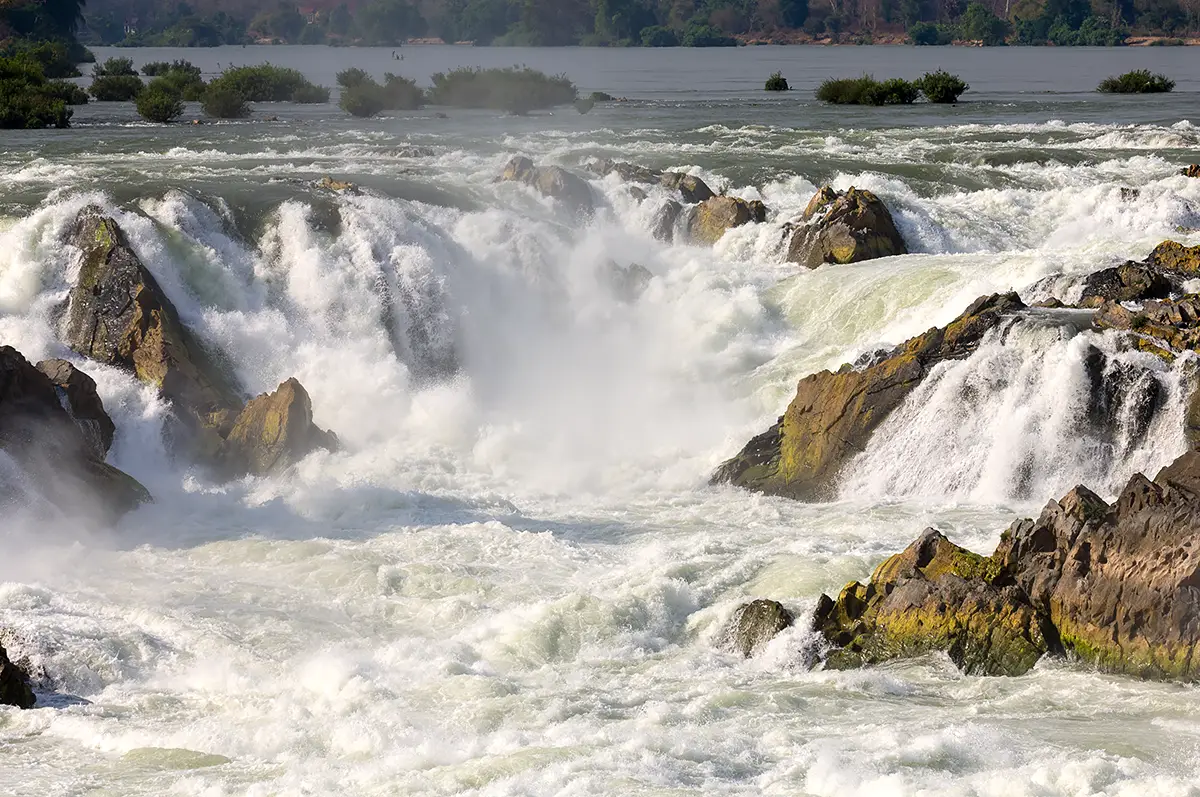
In the South of Laos, the mighty Mekong River branches out into a vast inland delta, forming many large and small islands that form the region Si Phan Don – or 4000 Islands. As the Mekong is forced through the reduced channels it forms two of the most famous and dramatic waterfall systems along the Mekong River: Khone Phapheng Falls and Li Phi (Somphamit) Waterfalls
These two waterfalls are so powerful that they effectively block all navigation along the Mekong River. During colonial times the French resorted to building a narrow gauge railway to bypass the falls – completely with massive gantries at either end, which can still be seen.
The power of these waterfalls is best witnessed up close, and they present a number of opportunities for photographers. They can be photographed with a fast shutter-speed to freeze the bubbling water, or if you bring a tripod, with a long shutter-speed to allow the water to blur. There is more on photographing waterfalls in Laos on this link.
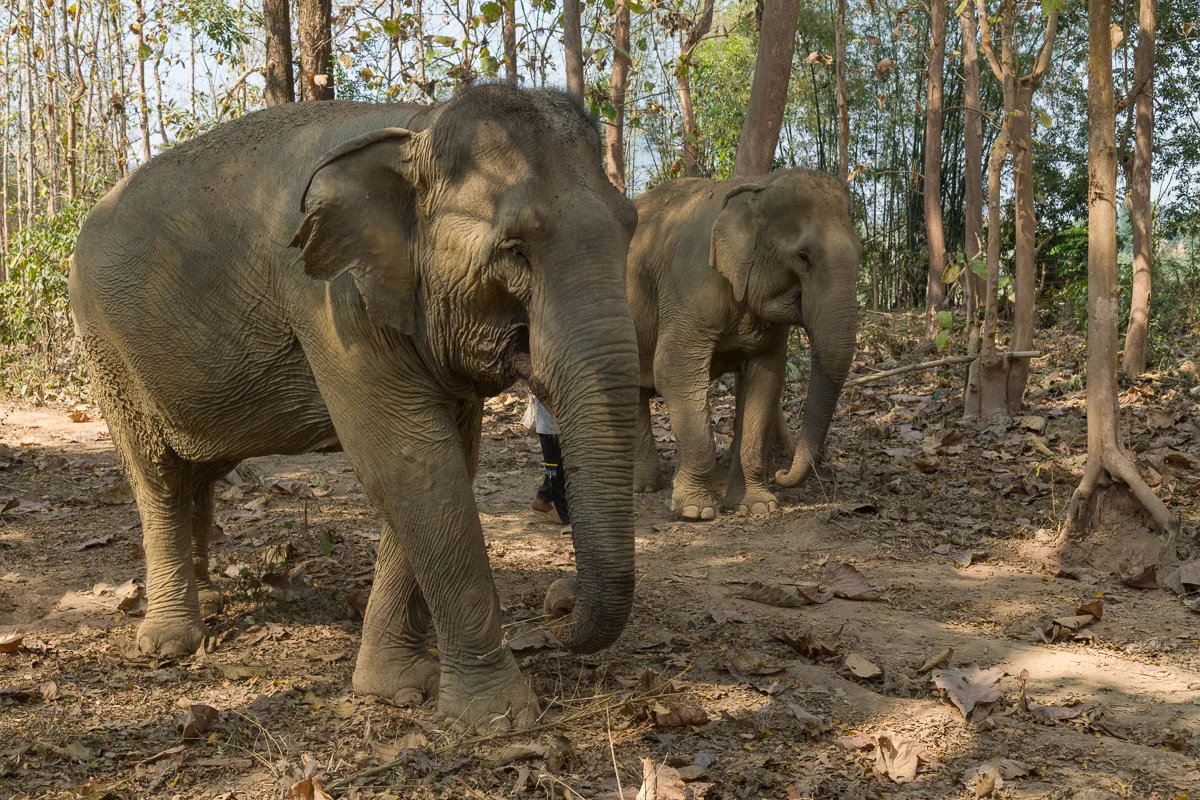
Laos used to be known as the Land of a Million Elephants after the 14th century Lang Xang kingdom. In Lao, Lang Xang means Million Elephants, which symbolised the kingdom's power, prosperity, and military strength. Even a hundred years ago there were tens of thousands of elephants in the country, with about 10% of this population being in captivity: used for logging and ceremonial purposes.
Currently, there are estimated to be just 800 elephants with only half of them still in the wild. Many of the rest are in tourist elephants camps where the exploitation continues. Reflecting Intrepid Travel’s strict animal welfare policy we visit the most ethical of all of the elephant camps in Laos – the Mandalao Elephant Rescue Sanctuary.
Of course, any highlights list is never going to encompass everything that there is to do in a country – especially one as culturally rich and varied as Laos, so here are seven lesser experiences that are still an unmissable part of travelling in Laos.
Pha That Luang (the Great Sacred Stupa) is the most important national monument and religious symbol in Laos, located in the capital city of Vientiane. Pictured at the top of this page, it is an iconic, gold-covered Buddhist stupa surrounded by active temples, it glows an even deeper colour at sunrise or sunset – well worth getting up early for!

After photographing the sunrise, grab a quick noodle soup breakfast then head back as the site opens to explore the stupa and the temples that are apart of the complex without crowds.
Some people love it – others don't get it, but the Buddha Park is worth a visit, if you have a bit of spare time on the trip. Also known as Xieng Khuan, it is a unique sculpture park located about 25 km southeast of Vientiane, by the Thai border.
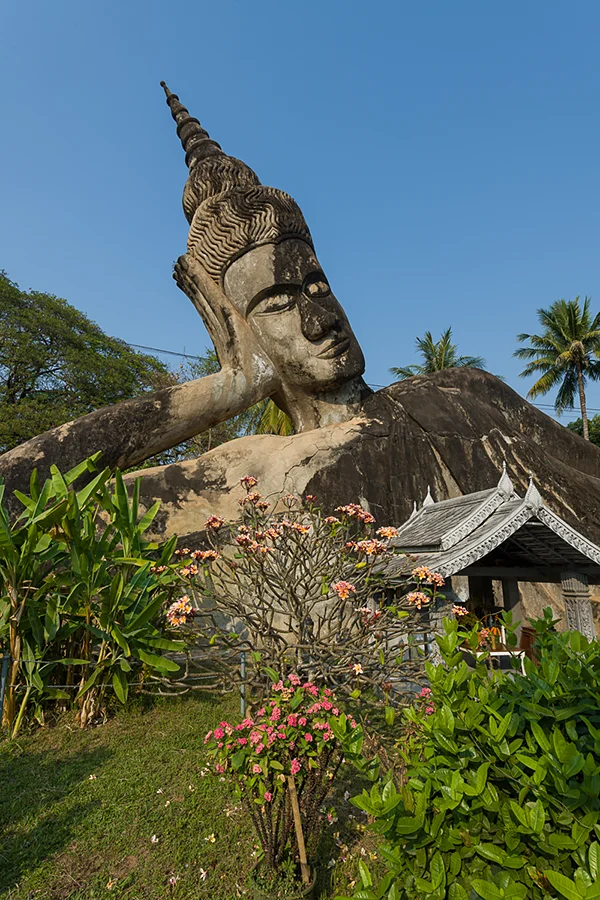
Created in 1958 by mystic Luang Pu Bunleua Sulilat, the site features over 200 concrete statues that blend Buddhist and Hindu mythology. This includes a vast reclining Buddha and a giant, three-story pumpkin structure that visitors can enter through a demon's mouth to represent a journey from hell to heaven
There are atmospheric markets all over Laos. Two of my favourites are the Dao Hueng Market in Pakse, and the Luang Prabang morning market.
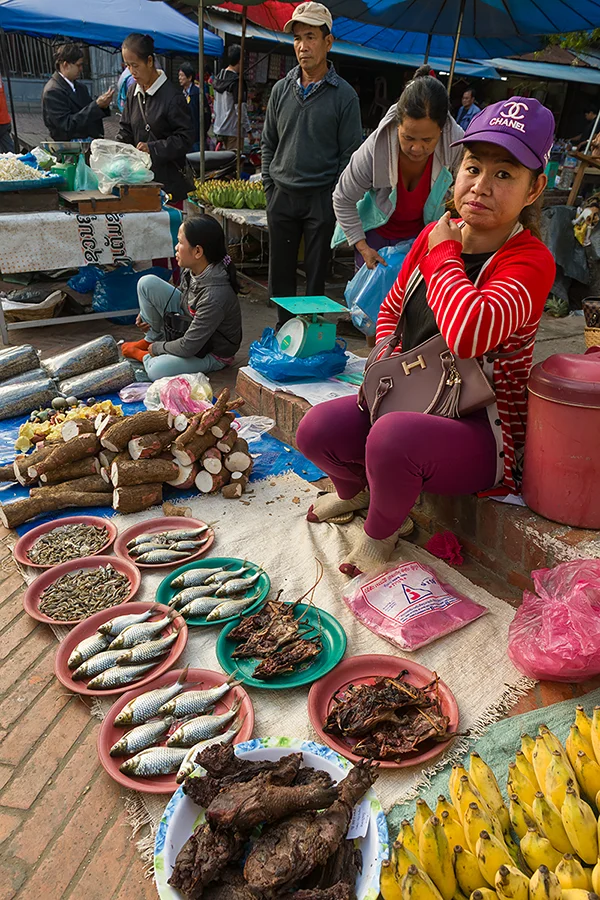
The Luang Prabang Morning Market is arguably the most atmospheric: outdoors in a picturesque alleyway, it is still possible here to see bushmeat being sold here. Known locally as siin paa or forest meat it used to be common all over Laos, but as the country has developed, it has become rare. Look out for grilled Bamboo Rats and sticks of frogs,
Culturally, redundant Buddha statues are never destroyed, they are taken to the Pak Ou caves down the Mekong River from Luang Prabang.

There are said to be some 6000 Buddha statues in the two caves – some of them over 300 years old. The setting is stunning too – overlooking the Mekong.
Buddhism flows through Laos as strongly as the mighty River Mekong, and you won't be able to gain an understanding of the country, unless you gain an understanding of its religion.

Over the years, Laos has developed its own style of Buddhist art, including a number of unique poses or mudras; including Calling for Rain which depicts the Buddha standing with his arms held straight down at his sides and Bringing Peace (or Abhaya) with the Buddha standing with both hands raised to chest level, palms facing outward, to pacify conflict.
Lao cuisine is celebrated for its fresh herbs, bold spice, and deeply savoury flavours that centre around sticky rice.
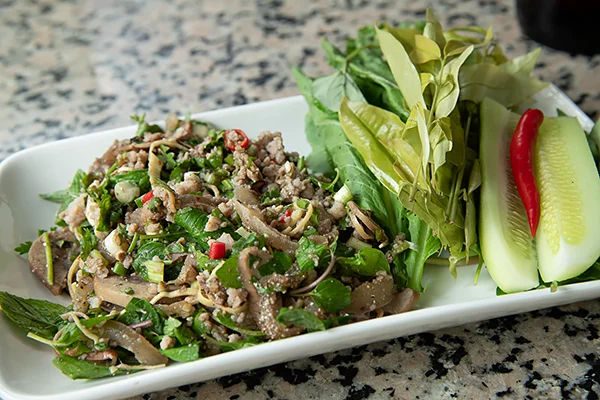
Borrowing a lot from neighbouring countries – including creating its own twist on Vietnamese Feu noodle soups, the national dish has to be Larb, a spicy minced meat salad tossed with lime, fish sauce, and toasted sticky rice powder.

To complement these fiery and aromatic dishes, locals often enjoy lao-lao, a potent, traditional rice whiskey distilled in rural villages – or indeed a glass of the ubiquitous Beer Lao.
There can be no better end to the day in Luang Prabang than sitting by the River Mekong in one of the riverside cafes and watching the sunset.
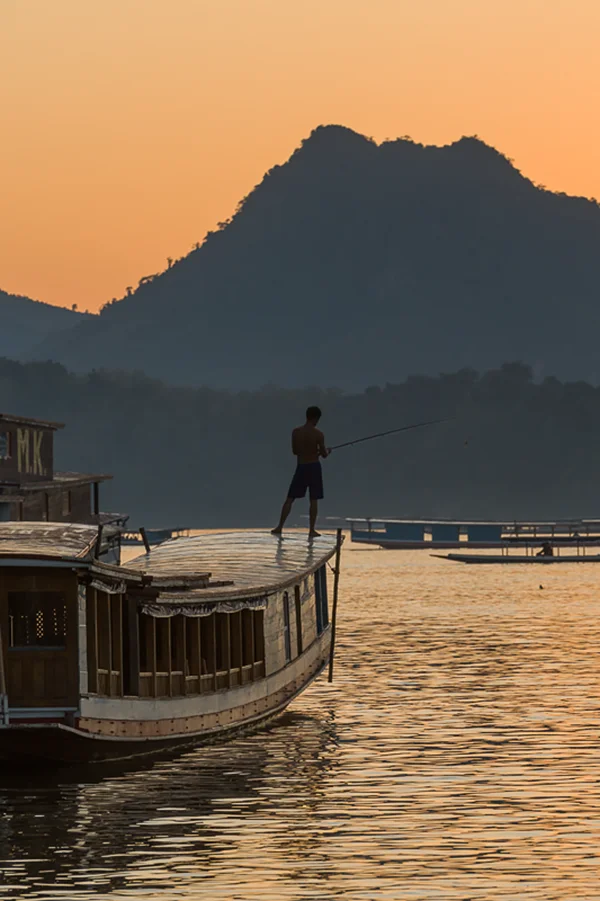
Historically used for trade, there used to be dozens of traditional rice barges moored here, but they have been replaced with tourist boats – but these still form a suitable platform for fishing!
To experience all that unmissable Laos has to offer, why not join me on an exclusive travel photography tour to Laos with all land arrangements and comprehensive travel industry bonding supplied by Intrepid Travel, who are one of the leading names in small group adventure travel. I will be on hand to help you to experience as much as possible, and to give you all the photographic assistance you need. You can see more details below, or see the full tour page by clicking here.
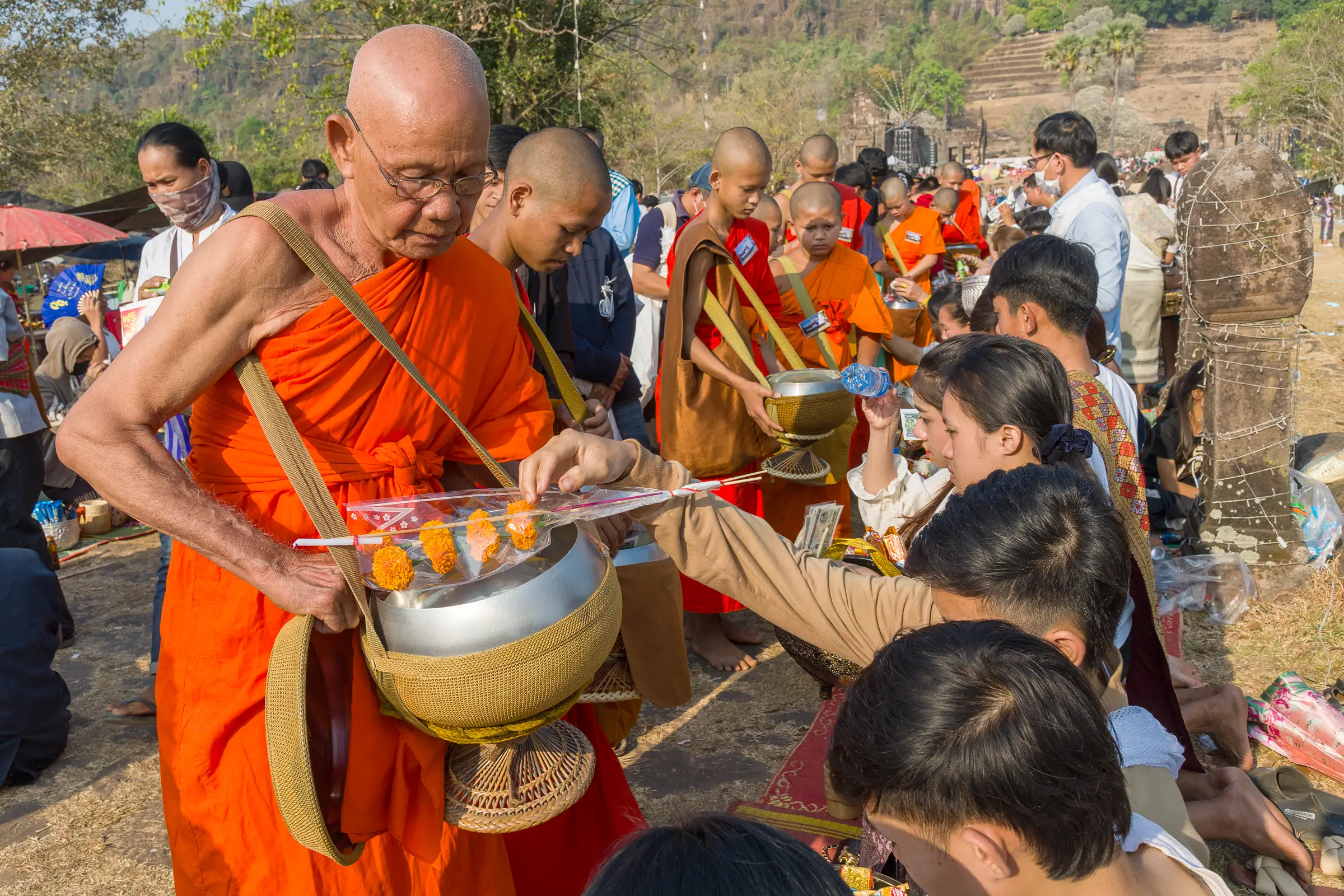
Take an adventurous photographic journey through the beguiling country of Laos, to experience the ancient Wat Phou Champassak festival, set amidst ancient Khmer ruins. We will also enjoy the islands of Si Phan Don, the haunting Plain of Jars, the thriving capital Vientiane and meet hilltribes in the striking Northern landscapes, before finishing in the charmingly historic city of Luang Prabang, the former Royal Capital and a UNESCO World Heritage City.