better travel photography.com
phototours with steve davey.
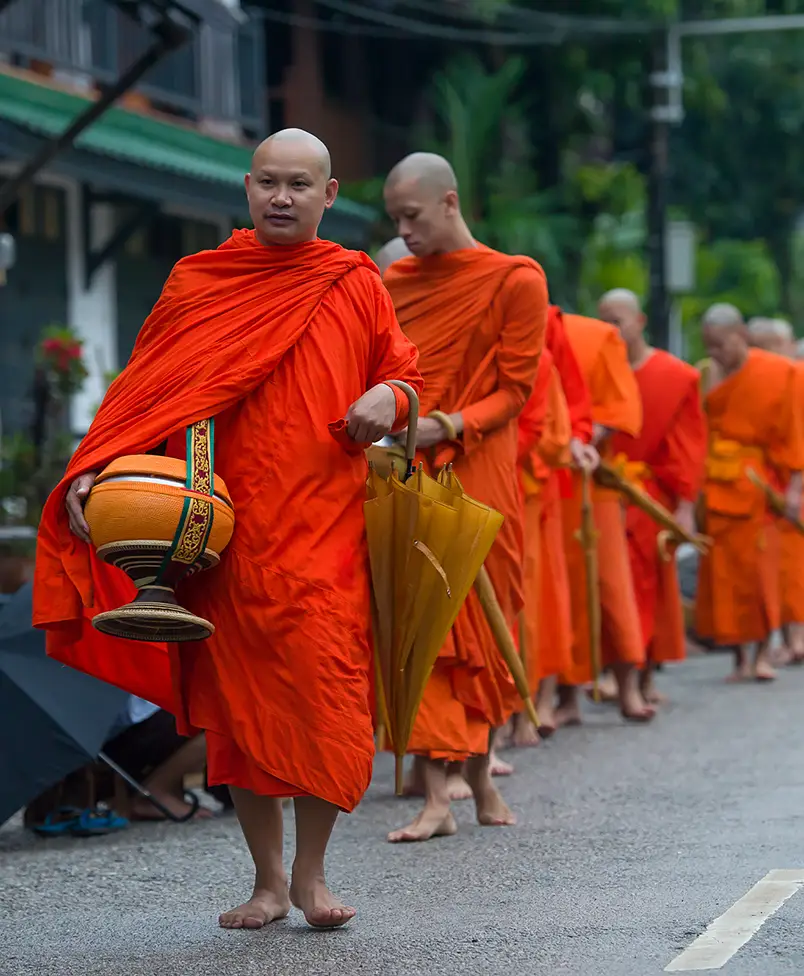
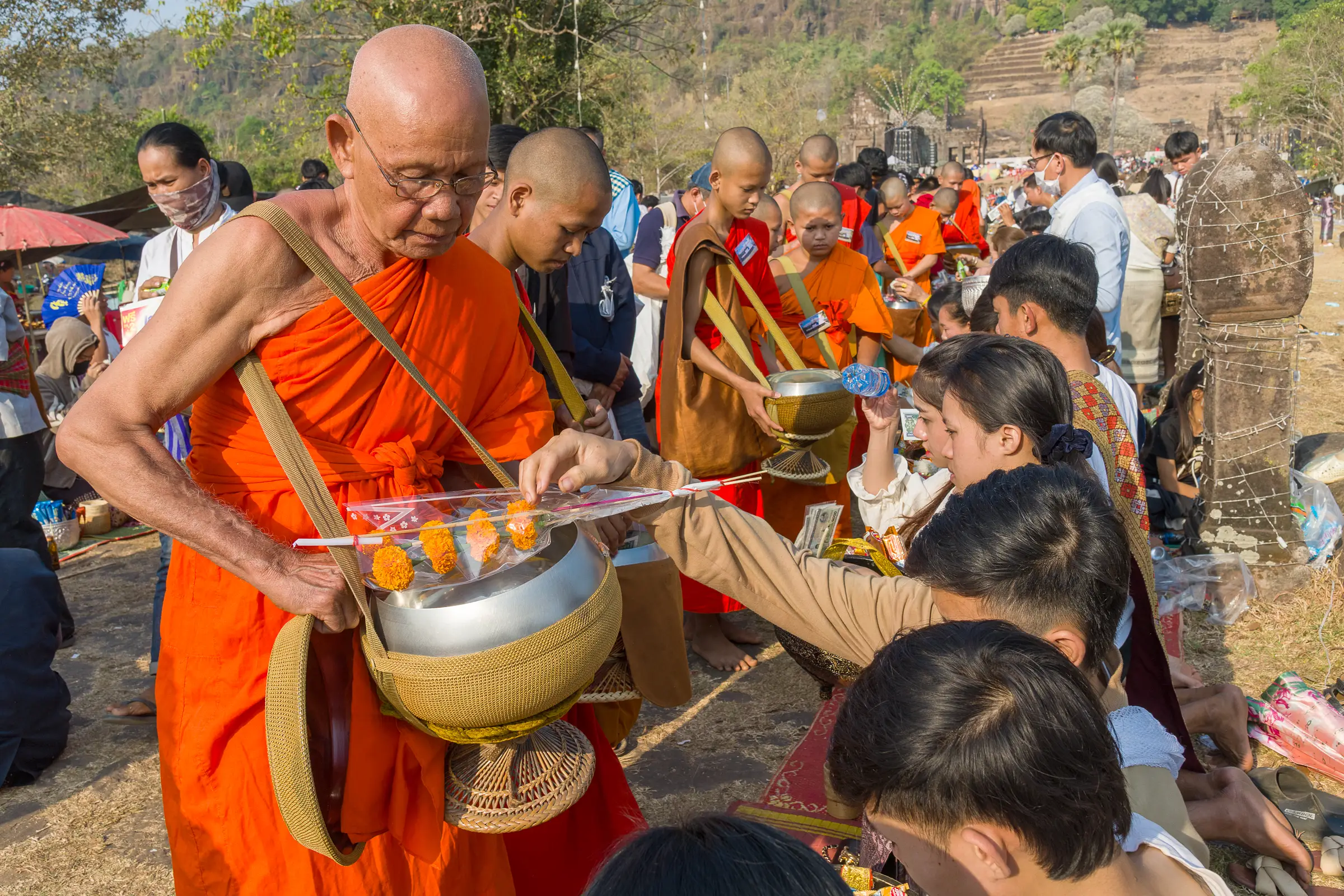
Over the years, I have photographed Buddhist monks on their morning alms round countless times and in most countries of Southeast Asia and even as far afield as Sri Lanka. Although the names and exact nature of the ritual seems to vary everywhere, the basic premise is the same. Monks get up before dawn and chant prayers, before heading out around sunrise in long lines, carrying traditional begging bowls. Silent and bare-footed, they receive merit-making donations of food from the faithful, who line the roads.
One of the best places to witness this traditional ritual – other than the Wat Phou Champassak festival where long lines of monks are given such an extravagant selection of donations that that they drag sacks behind them – is the Northern Laos city of Luang Prabang, which has some 33 active monasteries and countless monks.
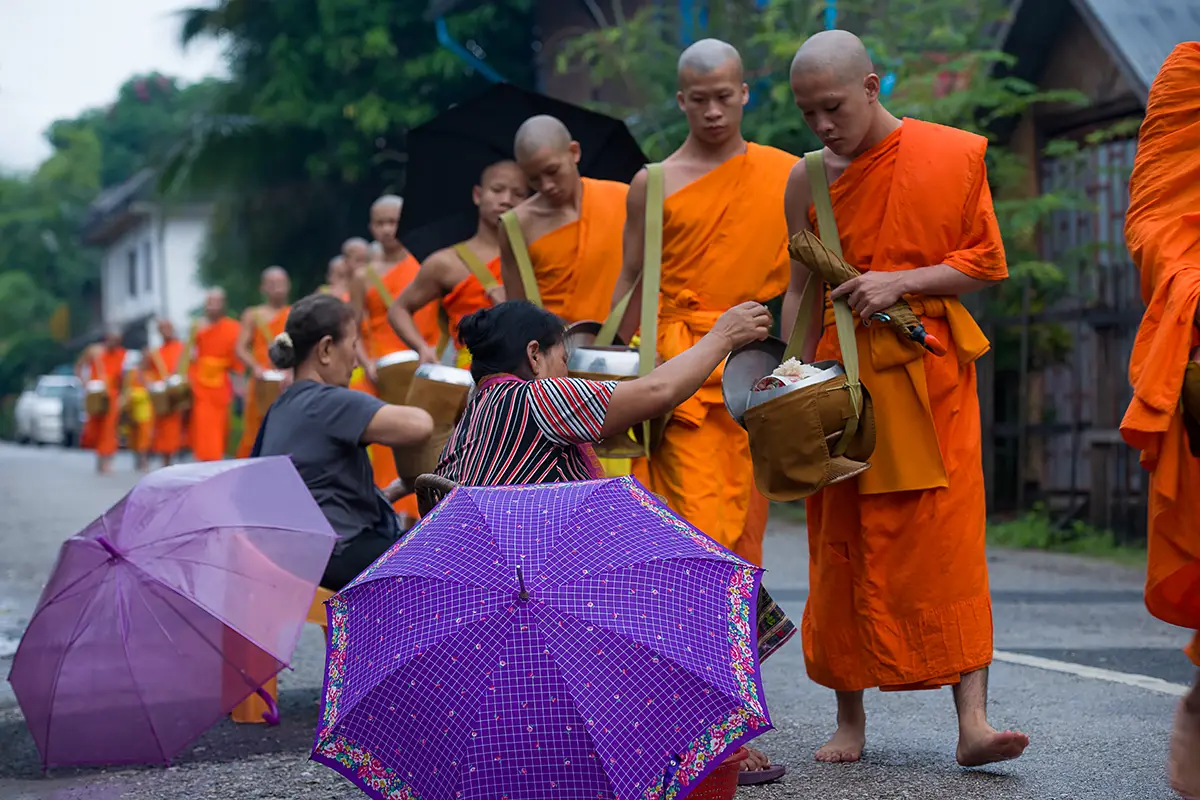
In Laos, this ritual morning alms round is called the Tak Bat, and every visitor to this city seems to want to photograph it. In fact this popularity has caused such an issue that the monk's morning alms round in Luang Prabang has been so disrupted by tourists, that it now happens well before sunrise.
Laos is a beautiful country and the people are incredibly welcoming. They are so kind that they will seldom show if they feel insulted. Don't rely on being told that what you are doing is wrong: it is up to you to make sure that your actions and behaviour do not offend.
Fortunately both myself, and Intrepid Travel are committed to responsible travel and ethical photography and I will be on hand to guide you with some of the rules are below:
Remember the Tak Bat is sacred - always treat the alms round with respect: it is not a tourist event, or a photo opportunity. It is an ancient religious ritual and nothing you should do should intrude or offend in any way.
Avoid crowded areas - many of the main areas are incredibly crowded, with people pushing, jostling and getting in the way of the monks. Apart from the fact that it will be an unedifying experience, don't contribute to the disruption. Luckily I know some much better places to head to for, where we will be able to enjoy a much more genuine experience.
Never get in the way of the monks - do not cross or walk in front of them, and certainly don't stand in their way and force them to walk around you. Pick a discrete, out of the way location and stay there until the entire line has moved past. Do not get too close to the monks, or the people giving donations: shoot with a more telephoto lens if possible.
Never be higher the monks - if possible shoot from a lower angle, so that the monks are higher than you. Women especially should be lower than monks, which is why local women sit to give donations. This will show respect and cultural sensitivity.

Don't use flash - using a flash, or even the flash light from a smartphone, will be considered intrusive and disrespectful when photographing the alms round. In low light you should always switch off any auto flash settings, and increase the ISO sensitivity so that you will be able to take pictures in low light. Most modern cameras will be able to handle very gloomy conditions, and remember: it is better not to get a picture than to act disrespectfully.
Don't try to engage with the monks - when the monks are on their morning alms round they are supposed to be silent and uncommunicative. Interrupting by talking to them or even smiling at them to try to provoke a response is disrespectful.
Act respectfully - If you do feel that you are inadvertently too close, or if the monks get too close to you as they walk past, then don't continue to take pictures – put the camera down and simply hold your hands together in a respectful praying pose - called a Nop - and bow your head slightly.
Don't join in the Tak Bat - Controversially, I would suggest not joining in and trying to give donations to monks yourself. Many traders will try to sell you sticky rice to give to them, but this has turned into "Look at me feeding the monks" Instagram moment, with wannabee influencers posing for pictures of their 'merit-making'. Often the bought in sticky rice is not freshly prepared and the monks generally would not want to receive it - but the rules of the Tak Bat say that they can't refuse.
If you are undecided, go to a monastery the day before and speak to some monks and ask what they think.
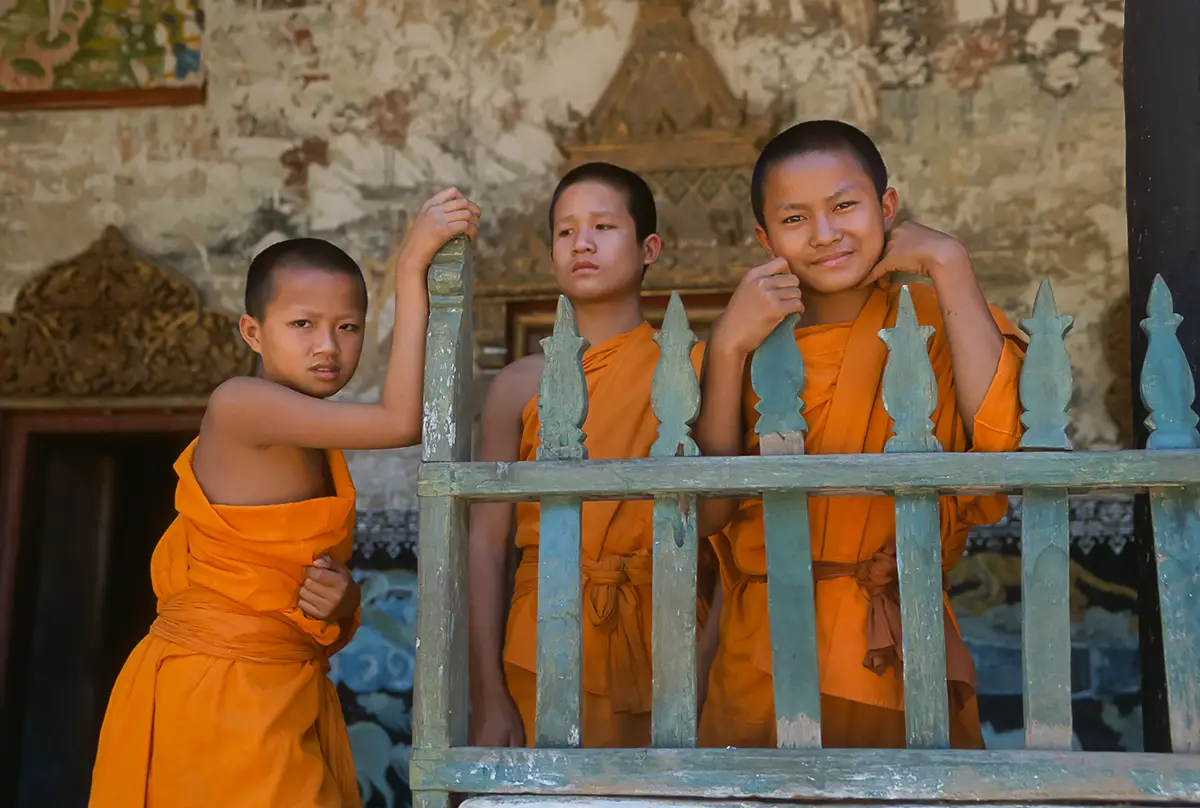
Away from the morning alms round, there are many more opportunities to interact with, and photograph monks in Laos, but there are a few things that you should always bear in mind.
Always ask permission - make sure to seek consent before attempting to take pictures, and never intrude or interrupt: they are monks, not performing monkeys!
Always show respect - when engaging with monks, you should avoid overfamiliarity. Most men in Southeast Asia will spend a couple of weeks in their life as a monk, and many of the young novice monks are in the monastery for schooling. Nonetheless, when they are in orange-robes, they occupy a revered status in the country. Avoid touching monks or passing anything to them directly, unless they expressly initiate it. Women especially show never touch monks.
Avoid flash in portraits - don't use fill in flash for portraits of monks. This is intrusive and disrespectful. Ideally photograph monks in light shadow, which will give a natural and sympathetic light.
Hang out in monasteries - most monasteries are busy in the mornings, but have a more relaxed feel in the afternoons, especially later as the heat drops. Some monks will be mending things or carrying out repairs. Often if you visit some of the lesser touristed monasteries, monks will try to converse to practice their English, allowing you the chance to engage, ask questions and shoot some more relaxed portraits.
Develop your own morality - It is up to you to decide where your morals and limits for photography lie. Don't take a picture that you know is unethical just because you think that you might get away with it: develop your own conscience and then stick to it.
There is a lot more to Laos than just monks and morning alms round, but you should apply the same ethical concerns whatever you photograph.
If you are like the idea of taking ethical photographs of monks in Laos, then why not join me on an exclusive travel photography tour to Laos with all land arrangements and comprehensive travel industry bonding supplied by Intrepid Travel, who are one of the leading names in small group adventure travel. On this trip we will have a number of opportunities to photograph monks on their morning alms round, including at the Wat Phou Champassak festival. I will be on hand to help you, and to give you all the assistance you need. You can see more details below, or see the full tour page by clicking here.
Take an adventurous photographic journey through the beguiling country of Laos, to experience the ancient Wat Phou Champassak festival, set amidst ancient Khmer ruins. We will also enjoy the islands of Si Phan Don, the haunting Plain of Jars, the thriving capital Vientiane and meet hilltribes in the striking Northern landscapes, before finishing in the charmingly historic city of Luang Prabang, the former Royal Capital and a UNESCO World Heritage City.