better travel photography.com
phototours with steve davey.
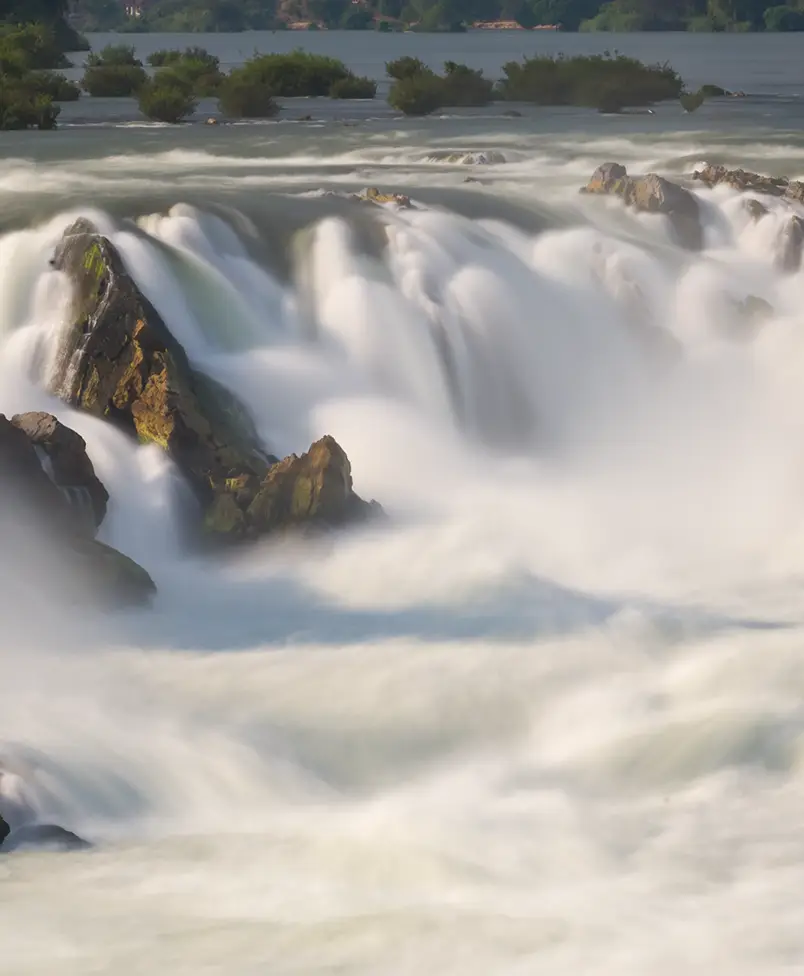
On our adventurous exploration of the entrancing country of Laos, we will be visiting and photographing a number of waterfalls, where you can easily try something a little different: photographing with a very slow shutter speed so that the movement of the water creates an ethereal blur.
This effect is much easier than you might imagine; but you will need to plan in advance and bring a couple of vital bits of equipment along with you. This is detailed in the boxout to the right; or below this text on smaller screens.
Here I will take you through some of the techniques that you will need to use to shoot unique images of the atmospheric waterfalls that you will encounter on our Laotian adventure; which you will be able to use for a range of subjects both home and away.
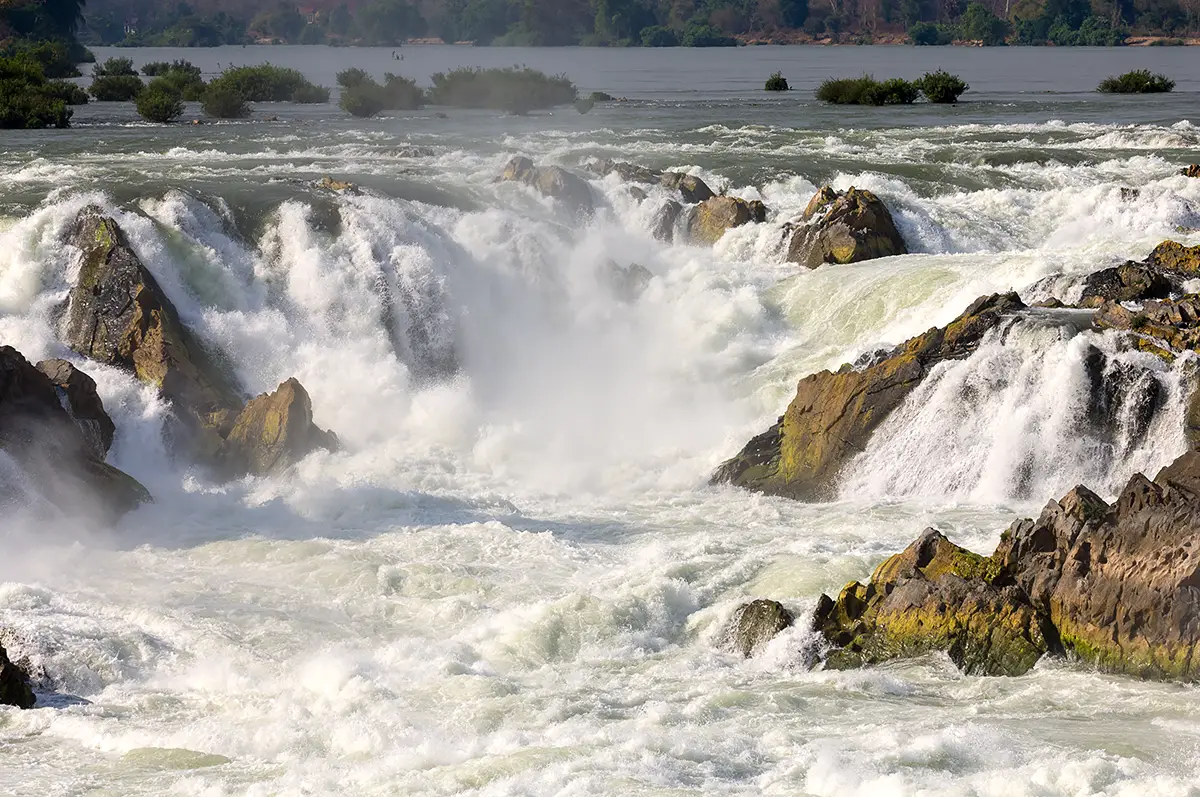
The first thing that you need to do is to find a suitable subject for a slow shutter speed: this might be a waterfall, a moving crowd or even a line of monks on their morning alms round.
It is not just the type of subject that you will consider – you will need to choose a subject that has some stationary elements, such as the rocks in this image. These create a contrast with the blurred elements and make the picture more effective.
You will also need to make sure that you have a stable viewpoint, where you are able to set up a tripod. If there are crowds around, or if you are on a slightly wobbly bridge or platform then even normal footfalls can create camera shake on long exposures, which will ruin the picture.
As well as shooting long exposures to create blur, it is usually worth taking a few shots with a fast shutter speed in order to freeze all of the movement. Increasing the ISO so that you can use a shutter speed of 1/2000 second will let you take a completely different picture rendering the water as sharp and bubbling.
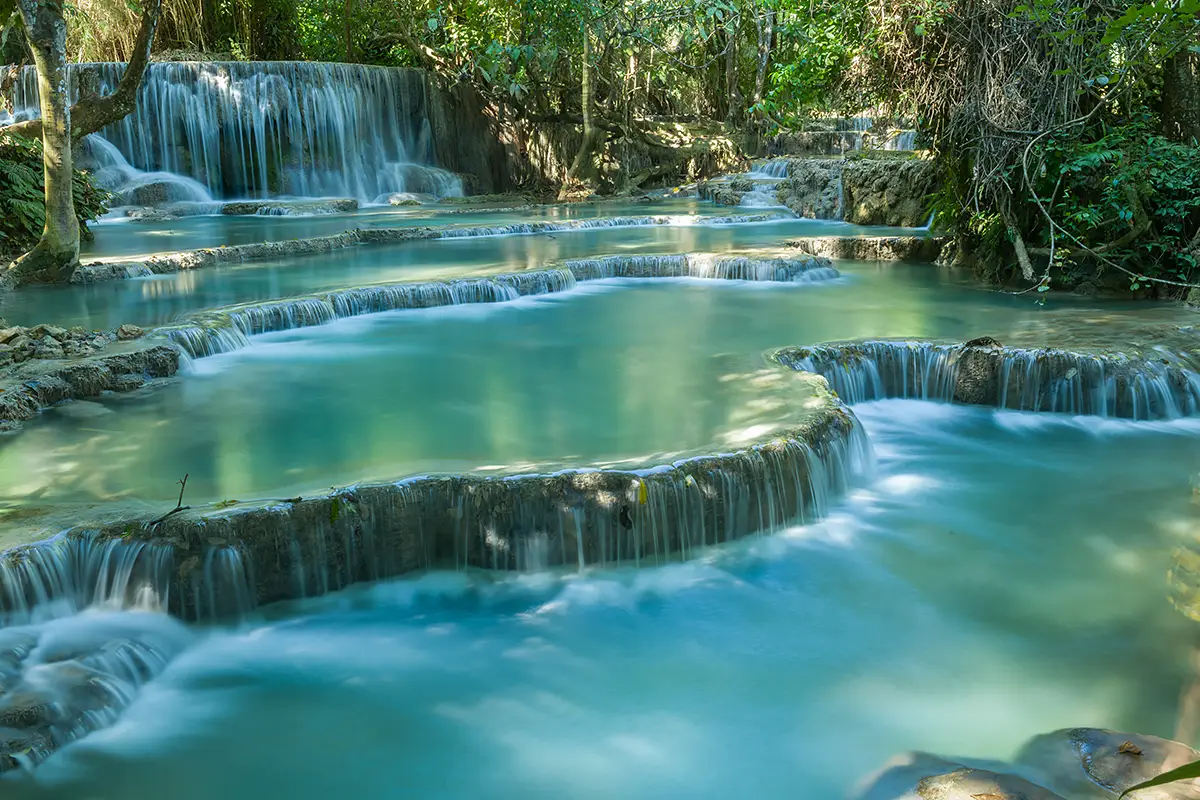
Technically, photographing at slow shutter speeds is fairly straightforward: the main issue is setting up your tripod on a stable surface. Make sure that everything is tightened and try to avoid extending the centre column as this can cause camera shake.
If your tripod has a hook underneath then hang a camera bag on it to increase stability.
In order to be able to use a long shutter speed without over-exposing the image, you will need to reduce the light reaching the camera. Turning down the ISO as far as it will go will help in low light levels, but if you are bright sunshine you will need to use a Neutral Density (ND) filter. These reduce the amount of light by a given number of stops without changing the colour of the picture.
The most popular strengths are If you use a 10 stop ND filter you will have to manually focus the camera and then switch off autofocus before fitting the filter - it will be too dark for the camera to focus otherwise.
Set a smallest aperture and the slowest ISO, and then calculate the exposure. Most cameras should be able to work out the exposure accurately if you are using a 3 stop ND filter, but a 10 stop can completely confuse it. In these instances, work out the slowest exposure that you can get without using a filter, but and then stop down by ten stops (whole clicks) of shutter speed. So if your measured exposure is 1/30 second, then ten stops will equate to 30 seconds. If you are using a 3 stop filter then the shutter speed will equate to 1/4 second.
The actual shutter speed that you should use will vary depending on the overall light levels, the degree of movement and the effect that you are aiming for. If you want to decrease the shutter speed from, in this instance, 30 seconds to four seconds, then you can commensurately open the aperture by three stops. This gives you virtually unlimited control over the shutter speed and therefore the degree of blur.
When you actually take the pictures, you should be careful of nudging the camera and use a remote release to avoid camera shake. If you are using an old DSLR, then using a mirror lock-up function can also reduce shake. Make sure to experiment with different shutter speeds and degrees of blur, and review the image until you get the effect that you are happy with.
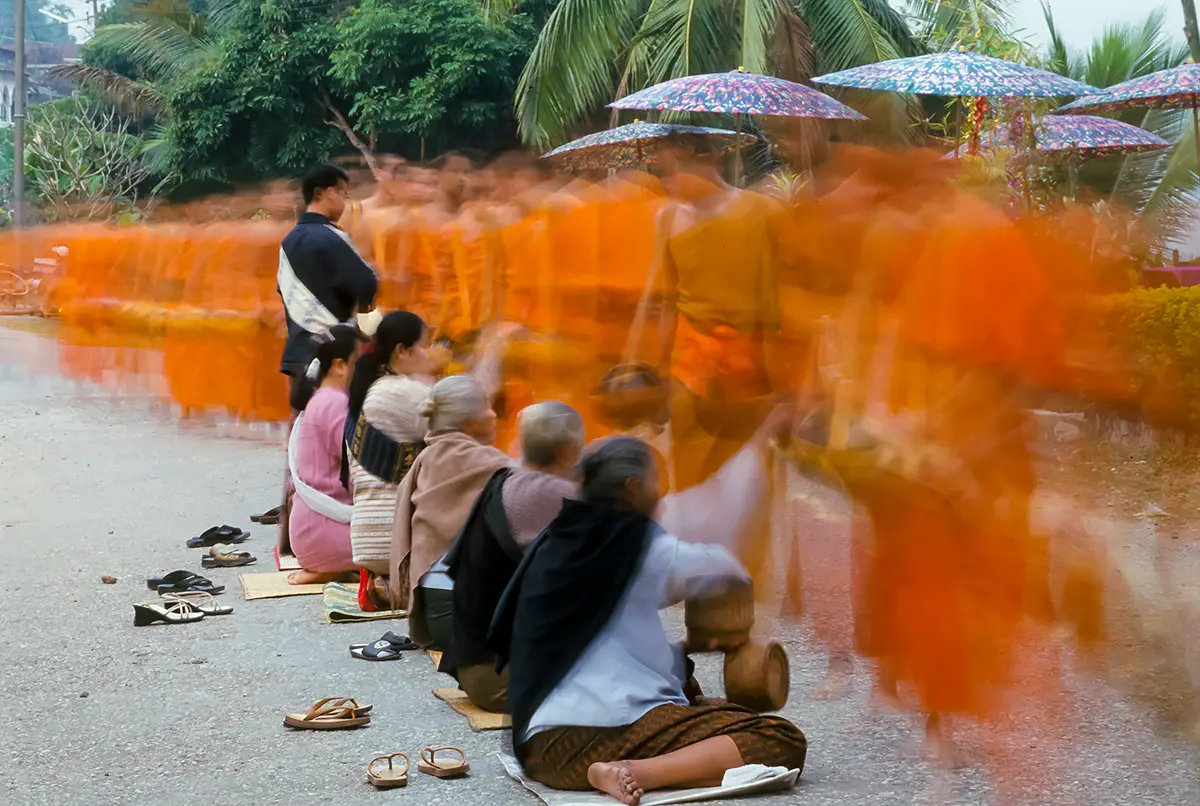
You can photograph a lot more than just waterfalls using this technique. I have used it in the past to photograph crowds of people – whether it be commuters in Tokyo, pilgrims at a festival in India or in this case, Monks on their morning alms round in Luang Prabang Laos.
Very similar rules apply to photographing moving people, as waterfalls, only you will probably need a shutter speed of around one or two seconds. Again, it is worth experimenting with shutter speeds to see which produces the effect that you are looking for.
With a bit of practice you will be able to estimate the required shutter speed depending on the speed of action and the ambient light, making the whole process quicker. It is worth practicing though as having an intentional blur from a slow shutter speed can work effectively with a wide range of subjects, and it is always worth carrying a tripod and ND filters just in case you can find a creative use for them.
As well as the general photography gear I would advocate taking on any trip, there are a few specific pieces of equipment that are vital to shoot long exposures in Laos.
For any overseas trip I would always recommend a camera with a range of focal lengths - from wide to telephoto. This will give you a broad range of creative choices when taking pictures.
This can be achieved with a simple travel zoom, such as an 18-200 mm lens: I usually use the so-called Nikon Holy Trinity of 14-24mm; 24-70mm and 70-200mm. This is sometimes swapped out for a Nikon 80-400 mm lens if I think I will need the greater focal length, but I can't justify the extra weight of the 150-600mm superzoom.
I would of course also carry spare batteries also and memory cards, as well as some way to back up your images: even if it is only mirroring memory cards on a camera with dual card slots.
If you are like the idea of learning how to take long exposure photographs in Laos, then why not join me on an exclusive travel photography tour to Laos with all land arrangements and comprehensive travel industry bonding supplied by Intrepid Travel, who are one of the leading names in small group adventure travel. On this trip we will have a number of opportunities to photograph waterfalls and monks on their morning alms rounds. I will be on hand to help you, and to give you all the assistance you need. You can see more details below, or see the full tour page by clicking here.
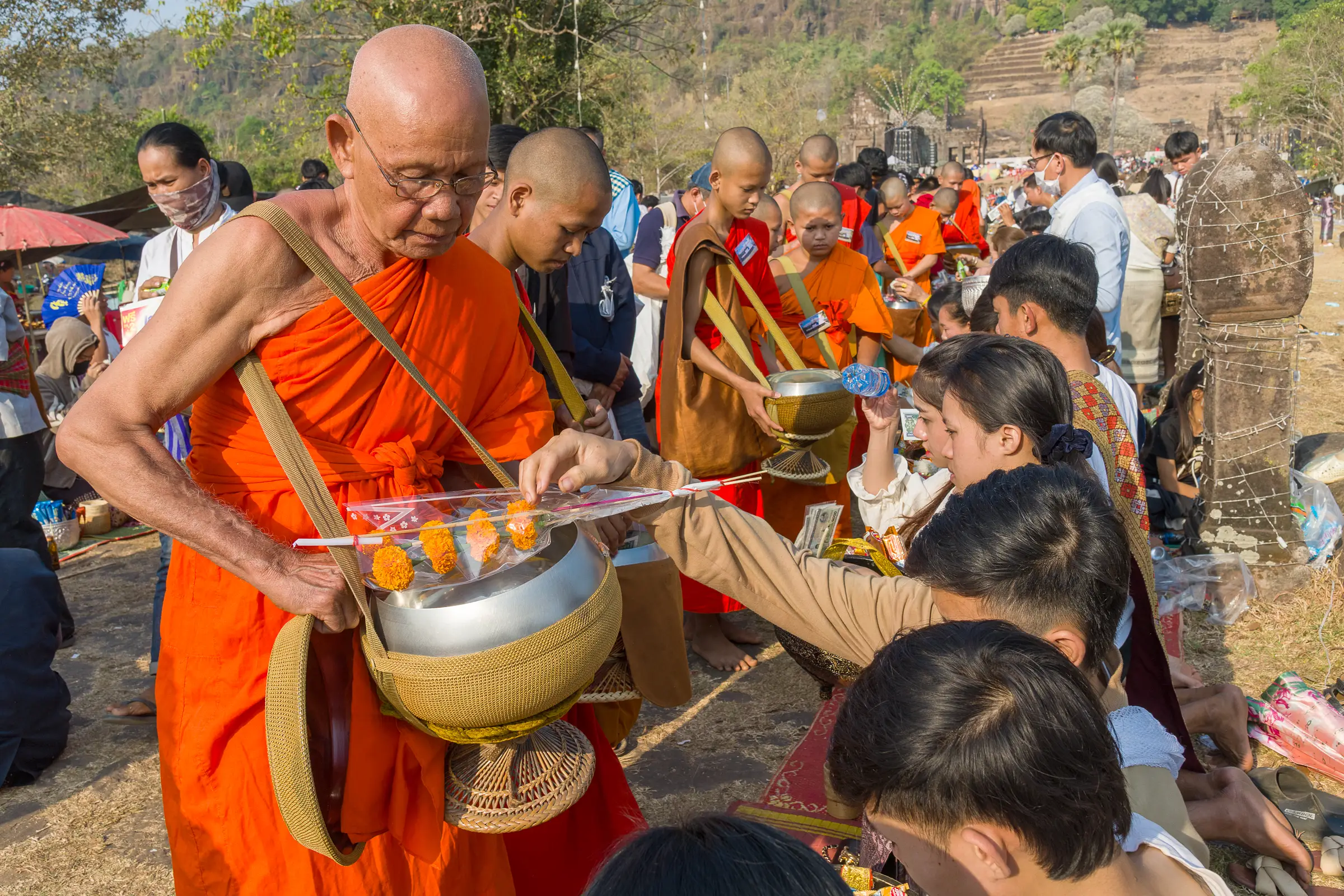
Take an adventurous photographic journey through the beguiling country of Laos, to experience the ancient Wat Phou Champassak festival, set amidst ancient Khmer ruins. We will also enjoy the islands of Si Phan Don, the haunting Plain of Jars, the thriving capital Vientiane and meet hilltribes in the striking Northern landscapes, before finishing in the charmingly historic city of Luang Prabang, the former Royal Capital and a UNESCO World Heritage City.