better travel photography.com
phototours with steve davey.
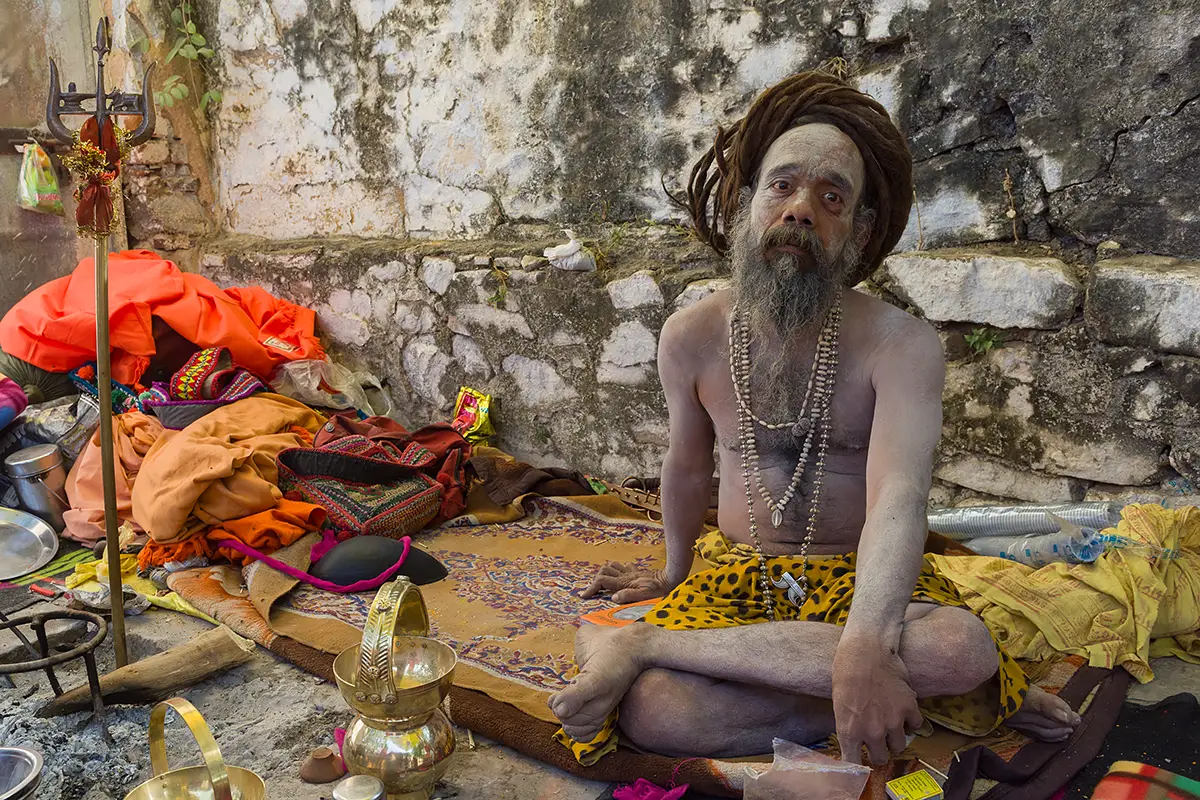
Indian sadhus, or holy men, are some of the most compelling portrait subjects in India. They are widely considered as living saints and treated with a heady mix of reverence and awe by many Indians. They have renounced a material life, to lead an existence of religion and prayer.
There are many types of sadhu that you can encounter in India. Some of these are quiet individuals, living a simple life in remote places; others are part of great ancient orders of Sadhus called akharas. Many of these are the naga, or naked sadhus, who walk round completely naked, covered only in the ash from fires. Some akharas – such as the feared Juna Akhara – were formed to defend Hinduism from Muslim invaders, and are trained in martial arts. They can still be seen in procession carrying swords, tridents and even clubs. Famously irascible, insult these sadhus at your peril.
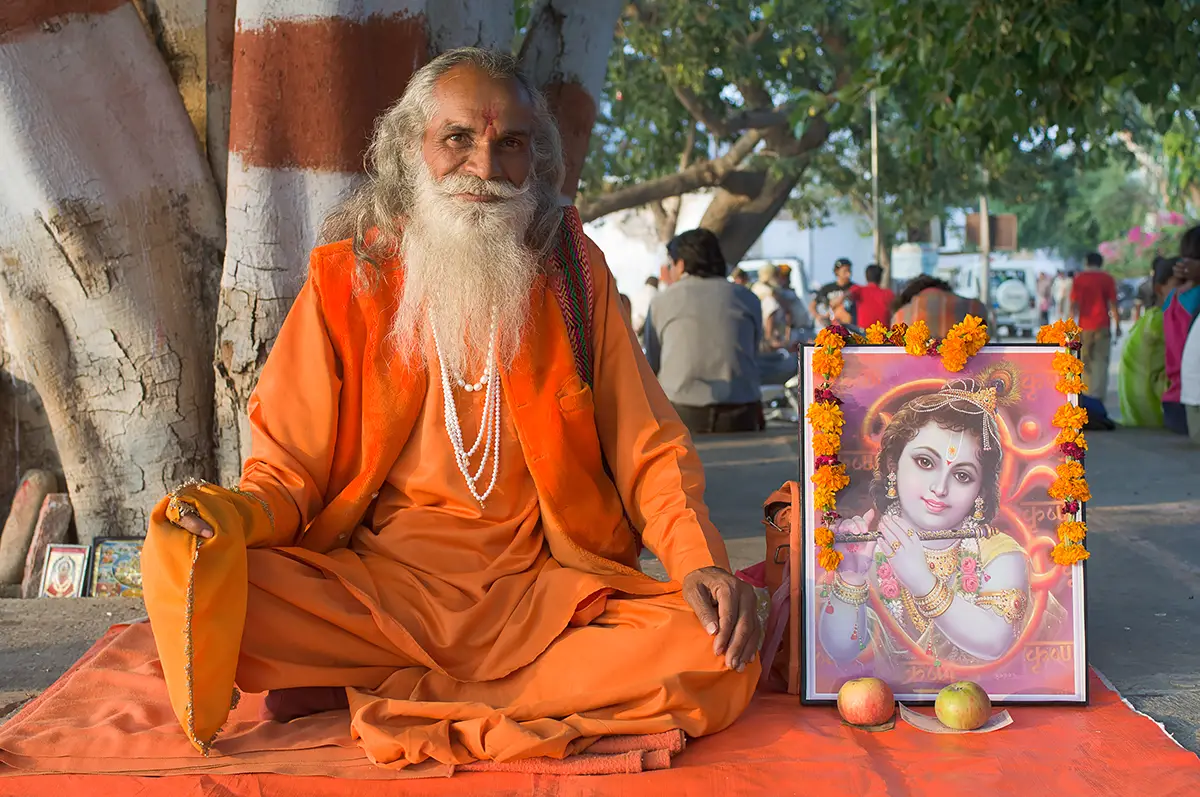
Of course, some of the so-called sadhus are just affable rogues, who do very little prayer, and their motivations are more connected to receiving donations than anything else.
As with most things in India though, the truth is always more nuanced and the lines are always more blurred. Genuine sadhus will still expect a donation and even those who are in it for the money can have a degree of spirituality about them.
The best way to approach any sadhus you encounter though, is take them completely at face value. As an outsider, we will never truly understand India or Hinduism. I have always found it better not to try to judge India by Western standards: accept it, celebrate it and give everything that you encounter the benefit of the doubt. There are a few rules though that you should always bear in mind when photographing sadhus – so that you don't offend.
Always treat sadhus with respect - even if you don't believe that sadhus are holy men, many Indians do, and so whatever your personal thoughts, it is vital to always treat them with the utmost respect – especially if you intend to take photographs.
If you are photographing some of the naga sadhus, this is even more vital: many of them are trained in martial arts and can be aggressive if you offend them.
Use the correct terms - the respectful term for a sadhu is Baba. You can use this as a term of address instead of a name. Many sadhus will even use Baba as a part of their actual name, so they might call themselves Tiger Baba Ujjain (the sadhu in shades at the foot of the adjacent column) or even refer to themselves as Motorcycle Baba (a famous sadhu who will ride around naked on an old Enfield motorbike).
You can make the name Baba even more respectful by adding the suffix -ji: so calling a sadhu Baba-ji is the most respectful term of address. This suffix can actually be used with many words to convey respect: so you might call a parent Father-ji.
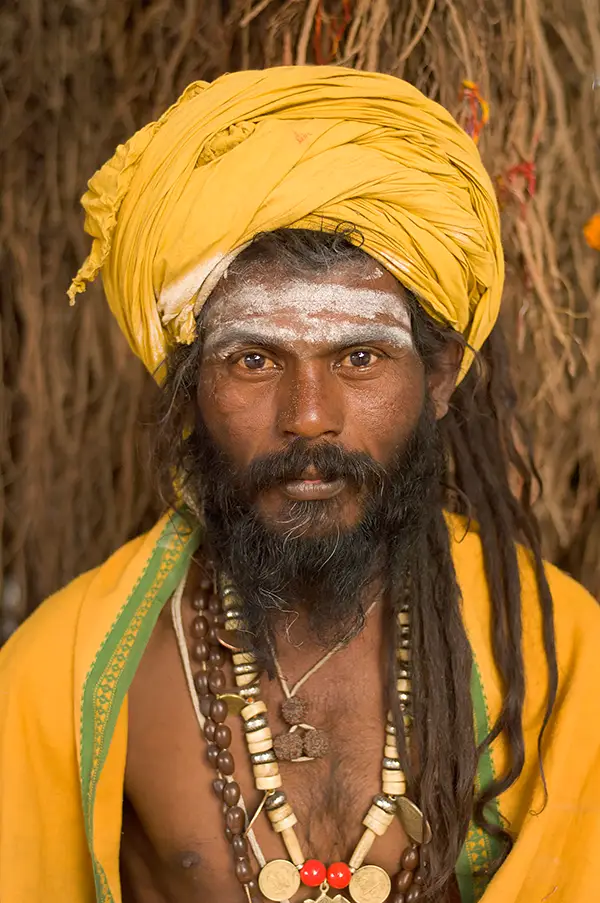
Remember the Namaste - another way to convey respect is to perform the Nameste gesture: press the hands together as if praying, hold them close to your chest and bow your head slightly. You can say the word namaste, or just use the gesture.
Namaste translates to "I bow to the divine in you", so performing the gesture and saying "Namaste Baba-ji" is the perfect way to introduce yourself.
Remove shoes before entering an ashram - many sadhus will hang out in ashrams. These are generally a small living area with an open fire in the middle. You will often be invited to sit inside of an ashram, but always slip off your shoes first and leave them outside of the sacred area.
I wear footwear that is easy to slip on and off for this very reason: the last thing that you want to do is have to deal with laces - especially if you have just shared a chillum with a sadhu! I will even slip off my footwear if I am kneeling outside of an ashram for a blessing, and am not actually setting foot in the ashram – as ever, it is always better to err on the side of respect.
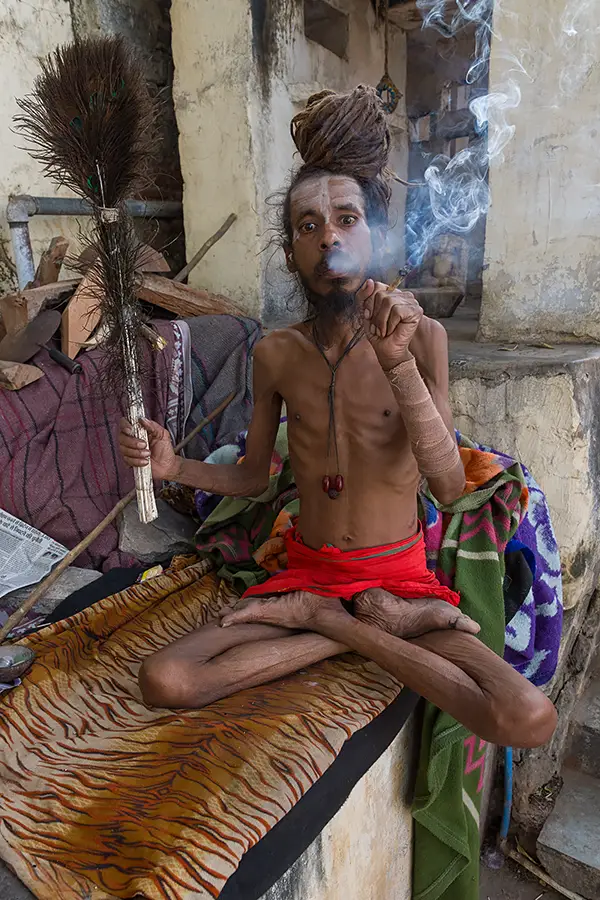
Be careful of accepting a chillum - if you sit in an ashram, many sadhus will off you a chillum: this is a small vertical pipe that is passed around a circle and smoked through a wet cloth. Apart from the risk of disease, you never know what is in the chillum. It might be tobacco, but it is more likely to be charas - a local form of hand-rolled cannabis resin. Many sadhus will smoke this as a part of their meditations and to help with fasting and penances – especially followers of Lord Shiva, who was associated with charas.
Always seek permission before photographing - this is vital whenever you take a picture, but especially important for revered figures such as priests and sadhus. Don't just march up and ask; show respect with a namaste, take some time and pay someone a compliment. Many people in India will at least understand limited English and so try to engage with them as respectfully as possible before taking a picture. Be aware though, that if a sadhu is giving blessings at a festival they probably won't want to break away to engage: this might be how they raise funds that they will live on for the whole year.
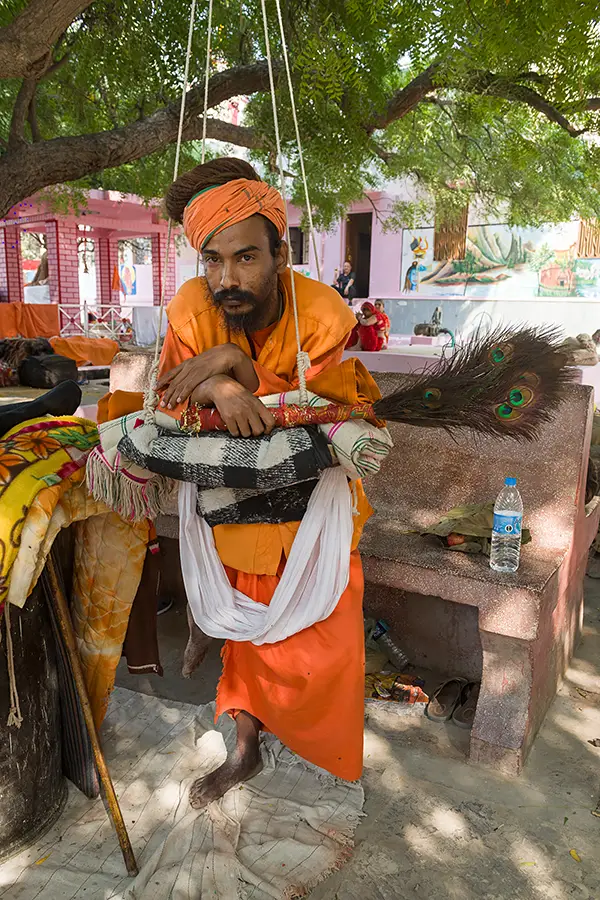
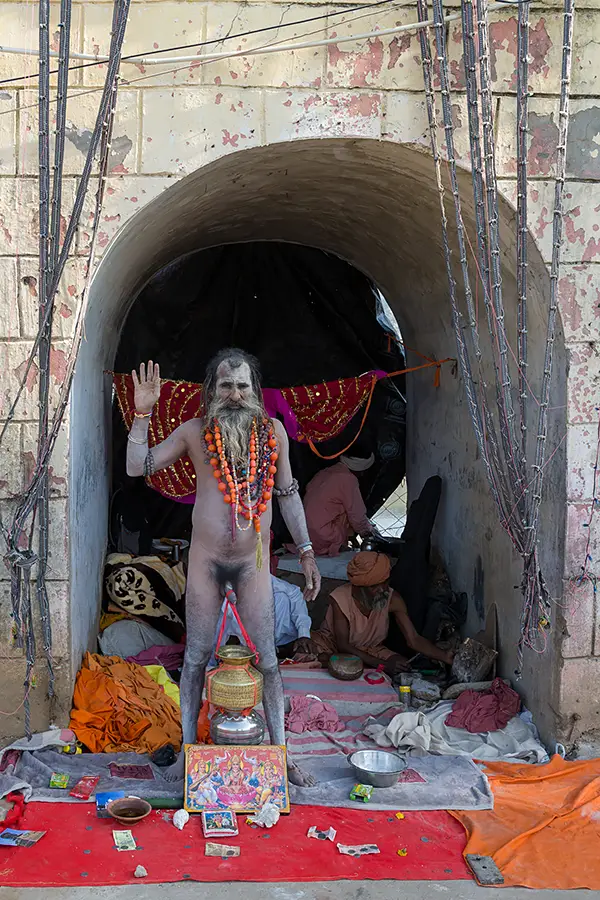
Look out for penances - some sadhus will carry out penances of self-mortification to help them to attain spiritual enlightenment, or even to display yogic skills or religious commitment. This is where the trope of a bed of nails comes from, although I have witnessed it a few times – even a swing seat of nails over a fire!
Standing penances are quite common: where a sadhu will remain on their feet for as long as 12 years – with a swing taking their weight so they can sleep.
You might see other yogic feats of endurance, although some can be more tricks to secure donations from local pilgrims. You might see a sadhu picking up or hanging weights from their genitals, and I once encountered a sadhu at Pushkar who assured me he could syphon a litre of milk through bladder control.
Avoid interrupting rituals and prayers - most of the time at festivals, sadhus are just hanging out and socialising. The real praying and rituals go on away from festivals, or on specific auspicious bathing times. Be aware though that if a sadhu is meditating or carrying out a ritual then don't intrude.
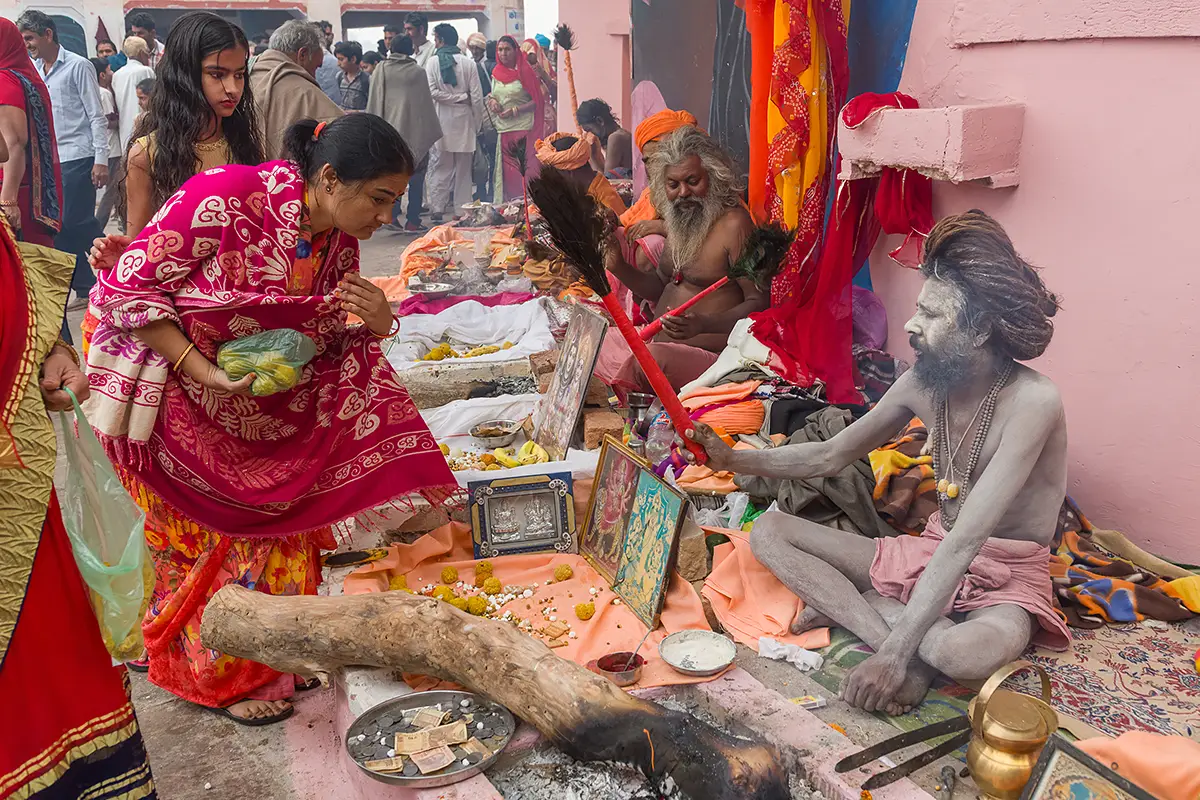
Don't use flash - using a flash can be considered intrusive: increase ISO sensitivity so you will be able to take pictures in low light. A foldout reflector can help to improve the light, and even be a talking point.
Try to tell the story - although sadhus make great subjects for portraits, try to tell the whole story about them, their surroundings and what they are doing. This might include them interacting with each other, their followers or even giving blessings to the pilgrims.
Traditionally sadhus have provided blessing to the faithful in return for a donation; which conveys respect and allows them to follow lives of prayer.
Giving donations to sadhus also bestows merit to the person making the donation. If you receive a blessing, take a photograph or even just sit in a an ashram for a chillum or a chai then you will be expected to make a donation.
You can also make donations other than cash. Although sadhus are supposed to renounce material possessions, most of them will really appreciate a small gift: although in my experience generally cash AND a gift is often expected.
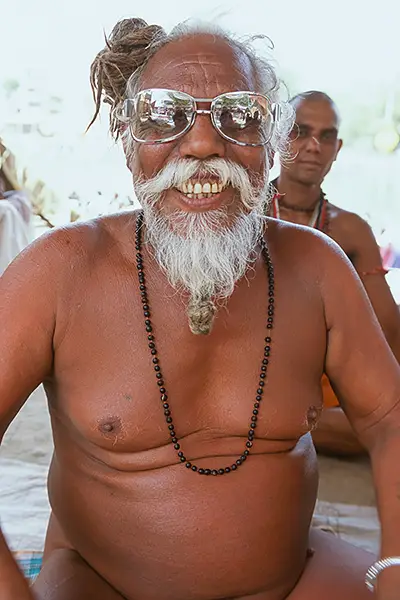
A lot of portrait photography is about engaging with people and I have had some great experiences with giving gifts of cheap sunglasses – as can be seen from the portrait above of a naga sadhu from the Juna akhara at a Kumbh Mela festival. I had photographed him and his brother at a different festival three years before, and brought out some of the pictures as well as a flamboyant pair of shades!
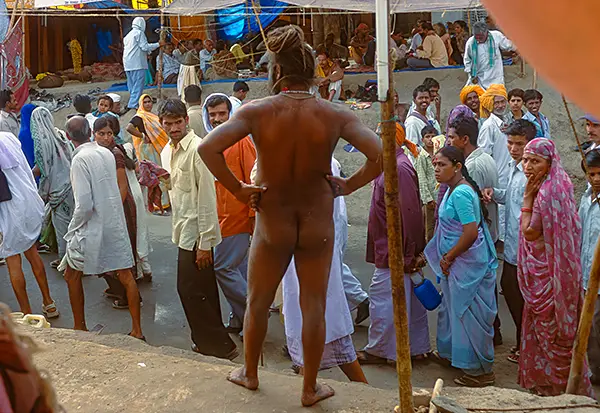
As a result, I was able to spend a lot of time in their ashram, and take more candid images from a sadhu's point of view.
Showing people the pictures you have taken is a great way to break the ice with them: even better if you can give the picture to them in some way. With film, this used to involve getting pictures developed and then posting them or bringing them on a subsequent visit. In our technological age you can often friend people on Facebook, or take their number and send them pictures on What's App.
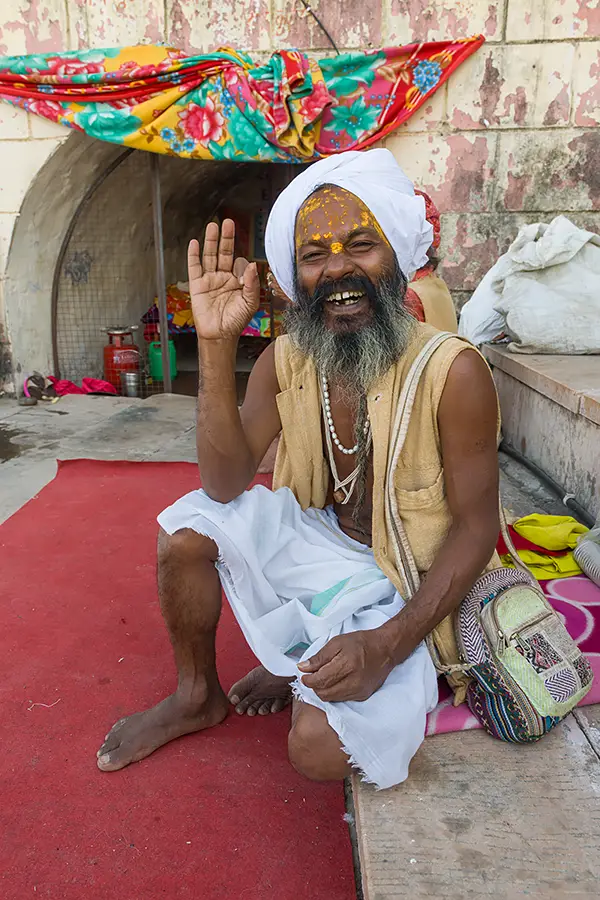
This can lead to enduring contact: Ram Das (above) is a sadhu who lives under a bridge in Pushkar. After connecting with him on What's App to send pictures I shot of him, he sent me a number of 'holy' videos and even a Christmas message!
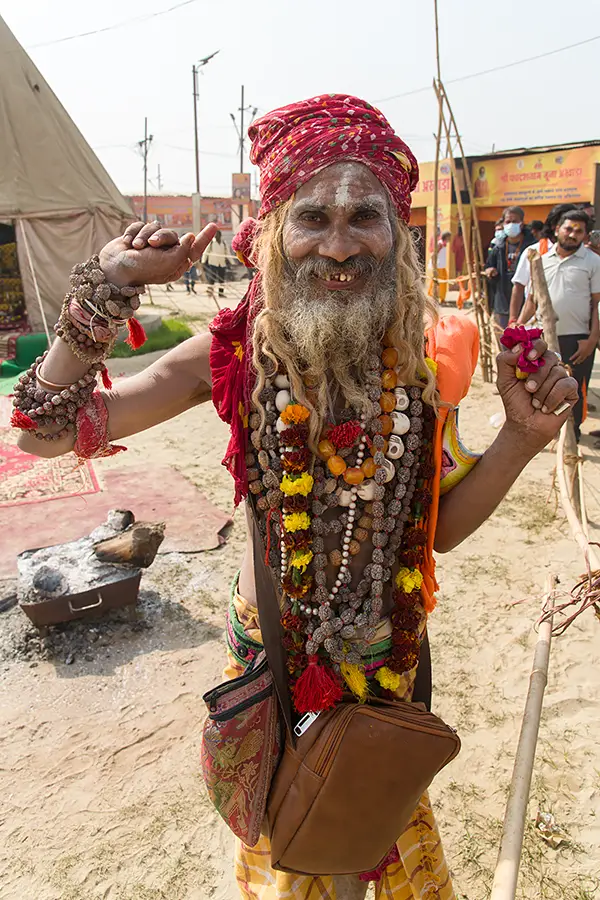
Depending on where I am going and the baggage restrictions, I will now often take along a relatively small battery powered Canon Selphy printer which churns out 6x4 prints for a shade over 30 pence each. This will connect directly to my camera and allow me to print wirelessly.
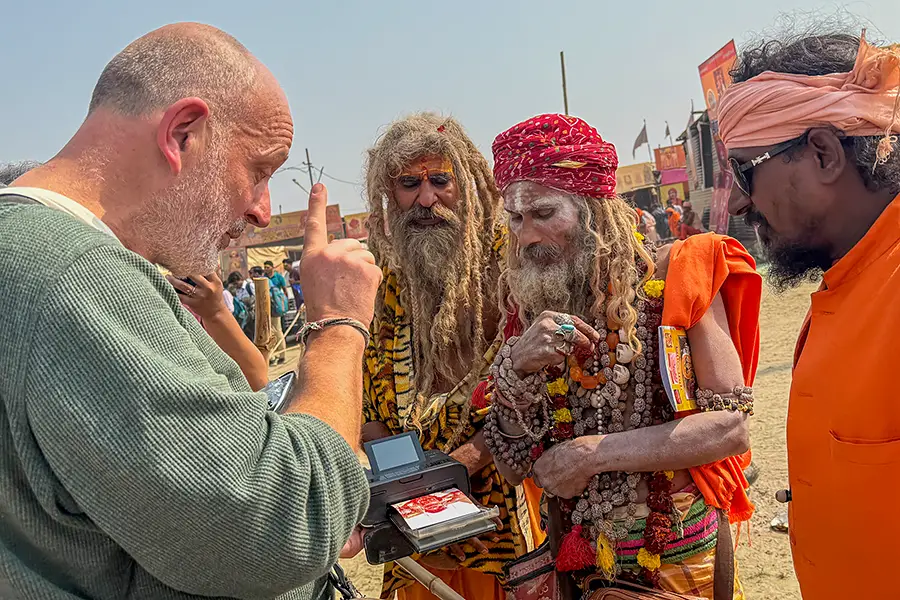
Not only are people appreciative of the print, they are also often quite fascinated by the process of watching their picture appear out of the printer.
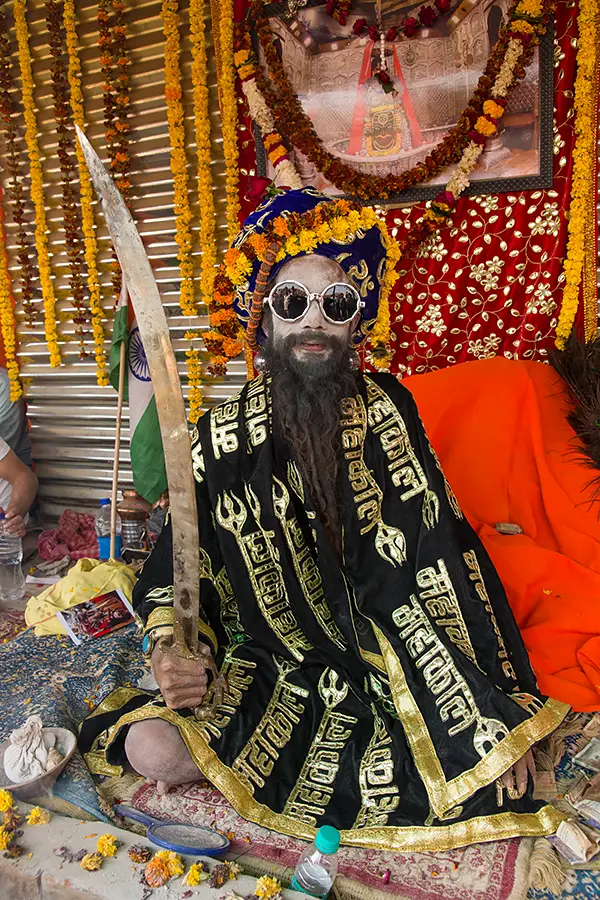
This is Tiger Baba Ujjain, at Kumbh Mela. Having a small printer can be so effective that you may well get commanded to carry out photoshoots for various sadhus; a lot of fun which can produce great images. The downside is you may be expected to print out pictures for their entourage.
If you are like the idea of taking ethical photographs of sadhus in India, then why not join me on an exclusive travel photography tour to Rajasthan with all land arrangements and comprehensive travel industry bonding supplied by Intrepid Travel, who are one of the leading names in small group adventure travel. On this trip we will have a number of opportunities to photograph sadhus at the incredible Pushkar Mela as well as at the little known Kolayat Mela. I will be on hand to help you, and to give you all the assistance you need. You can see more details below, or see the full tour page by clicking here.
This adventurous photography trip to the most colourful state of India visits the incredible Pushkar Camel Fair, as well as little-known Kolayat Mela. We also enjoy the highlights of Rajasthan: the cities of Jaipur, Jodhpur and Udaipur, as well as the desert towns of Bikaner and Jaisalmer – visiting historic forts, palaces and temples. We will head deep into remote Shekhawati, to see centuries old murals painted onto the walls of merchants houses and day to day rural life.
