better travel photography.com
phototours with steve davey.
Photographing portraits in Morocco is not as easy as in some countries – such as in Asia and the Indian sub-continent, but It is still more than possible to come away with engaged and evocative portraits – you will just have to work a little harder, but that is what makes it all the more rewarding.
I believe that consent is important for any portrait for both moral and creative reasons: for photographing people in Morocco it is absolutely vital. For religious and cultural reasons, many people in Morocco are not always happy being photographed, although this is definitely changing with the proliferation of the smartphone: many Moroccans now understand the attraction of photographing people. There are a few professional techniques and approaches that will make the whole process far easier and more successful, which I will be able to show you on our unique Impressions of Morocco photography tour.
Wherever you travel, you will achieve more engaged and sympathetic portraits if you approach someone and engage with them before asking if you can take a picture. In places, like Morocco, this is even more important.
What you need to do is engage with people. This can be as simple as smiling at someone and saying hello – in their own language if at all possible. Then ask them something, or pay them a compliment. In Morocco many people speak French as well as Arabic or Amazigh (Berber), so school French can help – especially with older people.
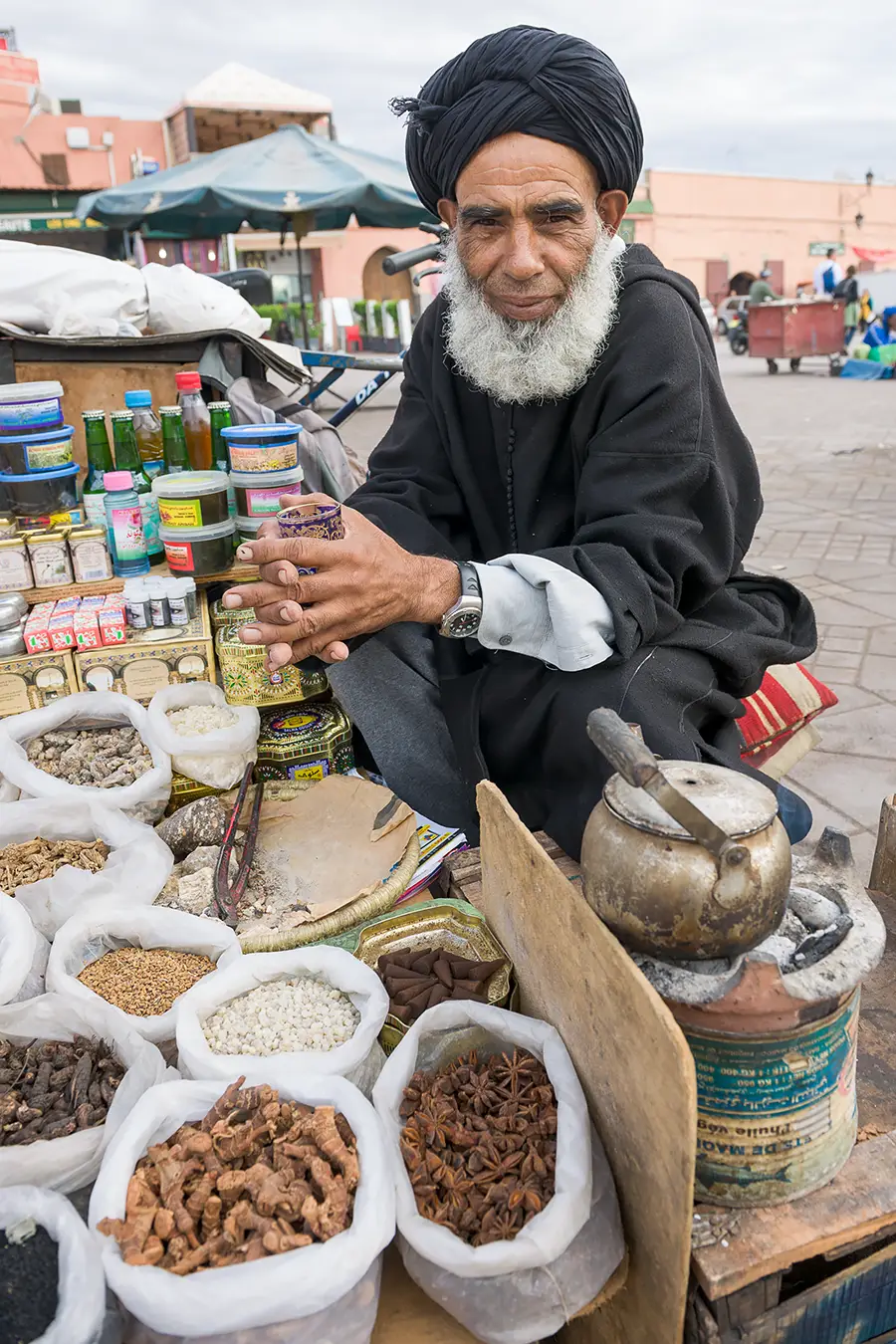
This trader in the main square in Marrakech understood French enough for me to ask him what star anise is called in Morocco (badiane). I then bought some, and told him he had a distinguished face, and asked if I could take a picture of him. He agreed, and as I was already crouching down, I had the perfect angle.
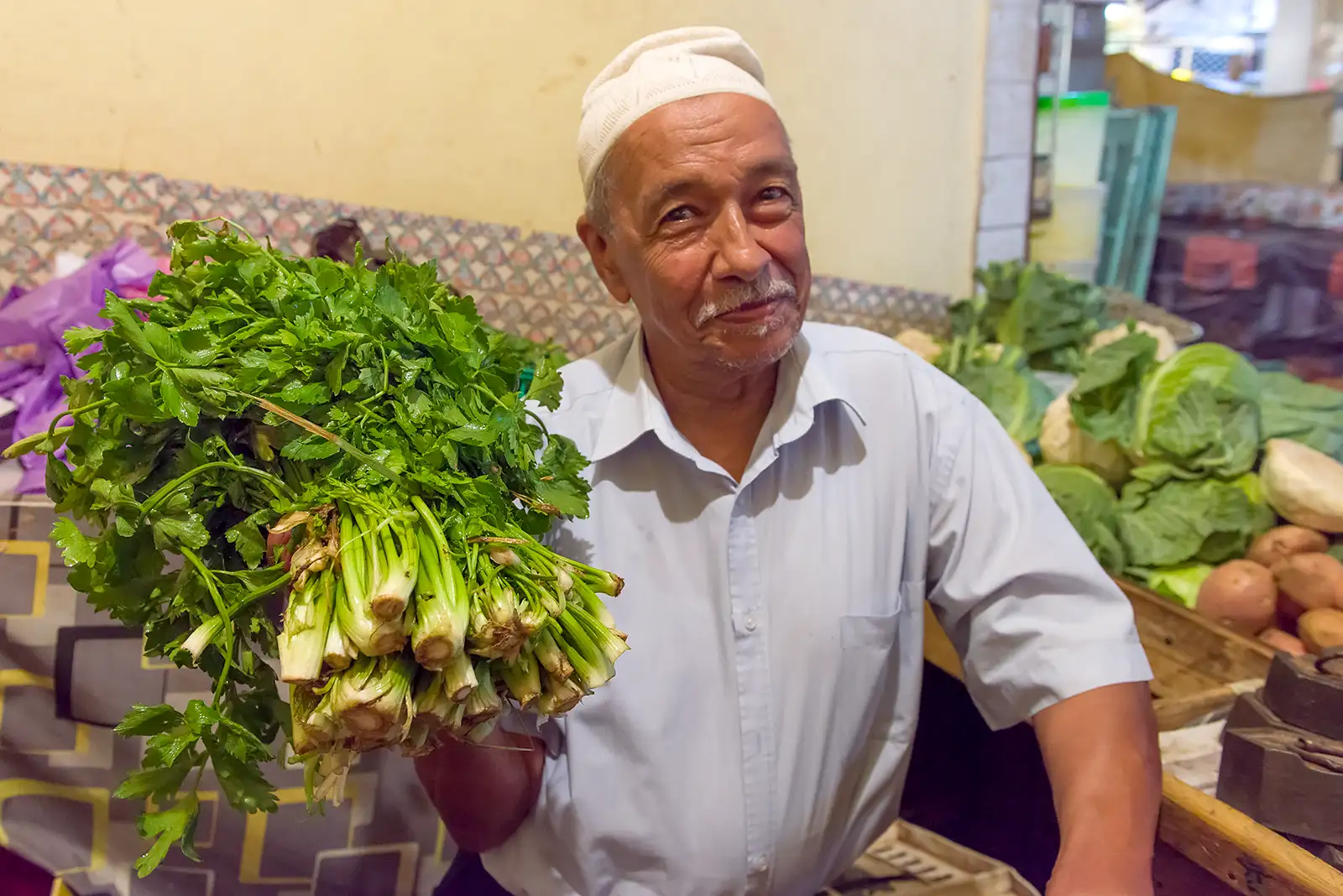
Most people will respond well to simple humorous interactions – especially in local markets, where traders often rely on their own personalities to sell their produce. I have always found that local people are generally as curious about us, as we are about them, and welcome the chance to interact: they just want the interactions to be genuine and not one sided.
In Morocco, you shouldn't just march up and ask to take a picture without some sort of interaction first: that approach is only marginally better than not asking, and generally about as successful.
The secret is to use the warmth and strength of your personality to charm people, so they like you enough to want you to take their picture. Even if you don't share a language, this can be done with speaking normally in English, miming actions, smiling and looking someone in the eye,.
The most important thing in any portrait is to get good eye contact. This is not just someone looking at the camera, but looking at the camera in such a way that shows a level of engagement, and conveys something about them and their personality. You won't get good eye contact with someone unless you give good eye contact to them. A good portrait should be unique in some way, as it should show how the subjects relates to you and your personality.
The first step for me is to completely prepare the camera before even approaching someone. What you don't want to be doing is fidlding with the camera when you should be engaging with your subject.
Similarly, don't keep the camera up to your eye for more than a few seconds as this will break the eye contact. Look your subject in the eye and engage with them to create eye contact, and then lift the camera to eye level and shoot a few pictures. As I will have already set the camera up, I might just have to move the focus sensor over an eye to ensure sharp focus.
After a couple of quick pictures, drop the camera out of your eye level and look the subject in the eye again to reestablish eye contact. Talk to them and engage in some way, then briefly raise the camera and shoot again for a few seconds. You camera will be a temporary intrusion to the eye contact, rather than a permanent barrier. Your subject will be more likely to look into the camera, and not
This does mean that it is difficult to get meaningful eye contact if you are not using a viewfinder, especially if you are composing with a screen that is outside of your eye line. The risk is that you will maintain eye contact with the subject, which will mean that they are not looking at the camera, and so the picture will not show eye contact and so the person looking at the picture will not be able to look the subject in the eye and feel the engagement that you would have felt.
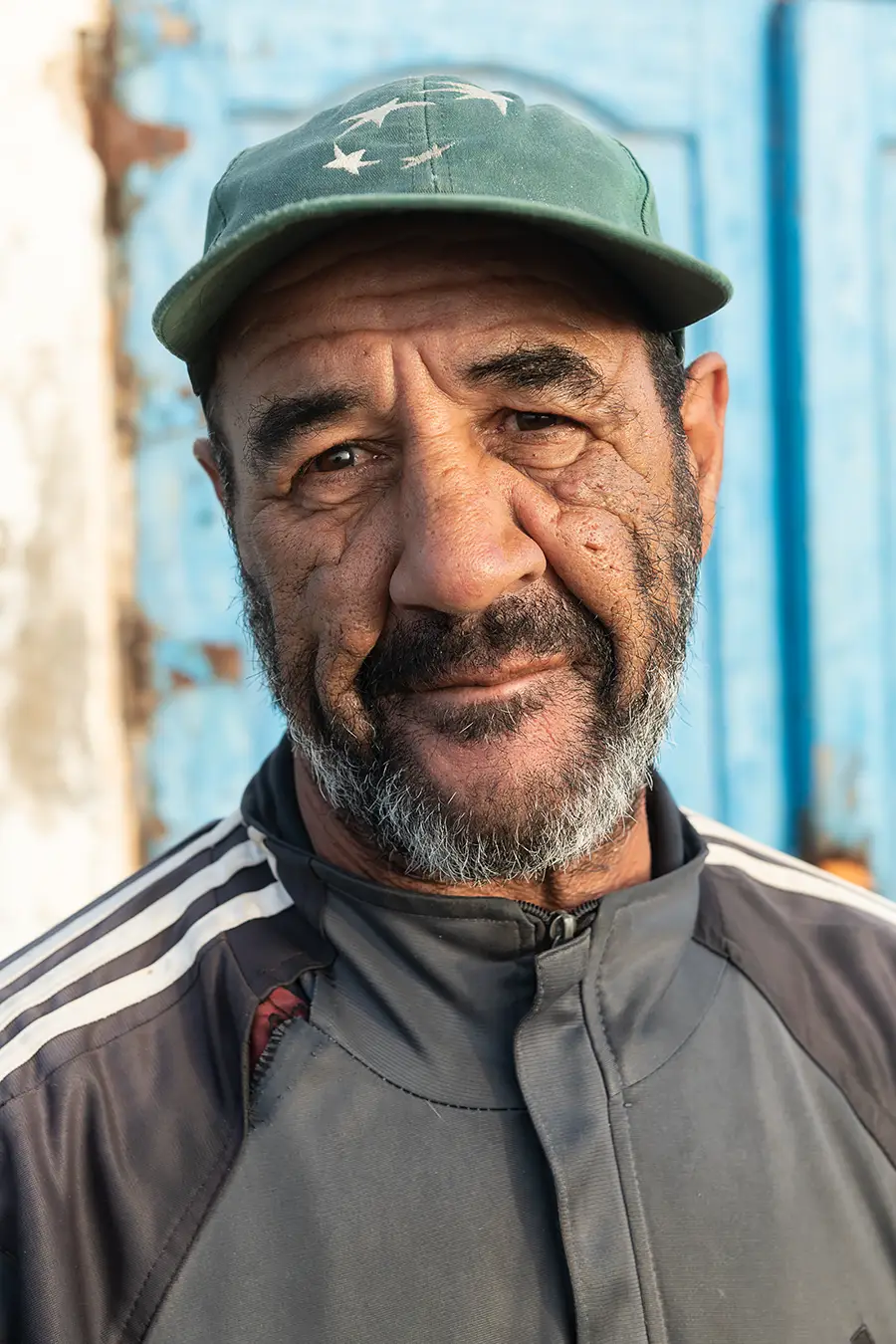
Approaching people and engaging with them will not only give you better pictures, it can also mean that you have a better experience and better memories. For me, people are the highlight of any trip abroad, and having a camera means that I have the perfect excuse to walk up and talk to them.
Walking through Essaouira Harbour a few years ago I paused to talk to a retired fisherman who was hanging out there. I started off in French, but it turned out that he spoke good English.
He asked me where I was from, and when I said England, he asked whether it was London. I replied that I used to live in London, but had moved a few years down to Somerset. This spiked his interest and it turned out that when he was in his 20s he lived and worked in The George Hotel at Crewkerne, less than 10 miles away from where I live.
Apart form being a great coincidence, it was really interesting to hear a bit about his life and then have him acknowledge me when I saw him again over the next couple of days. It also meant that he was more than willing for me to shoot a couple of pictures, and I feel that there is a real sense of engagement, and even mild amusement in the image.
I have so many images from all over Morocco, and all over the World, where I have had experiences and memories that I simply wouldn't have if I had stolen an image without asking or simply walked on without taking a picture. I obviously have all of the pictures too, which is a bonus!
Learning how to approach people can be a bit of a hurdle, but once you have mastered it, then it will open many doors for you, both creatively and also so you get more out of your travels.
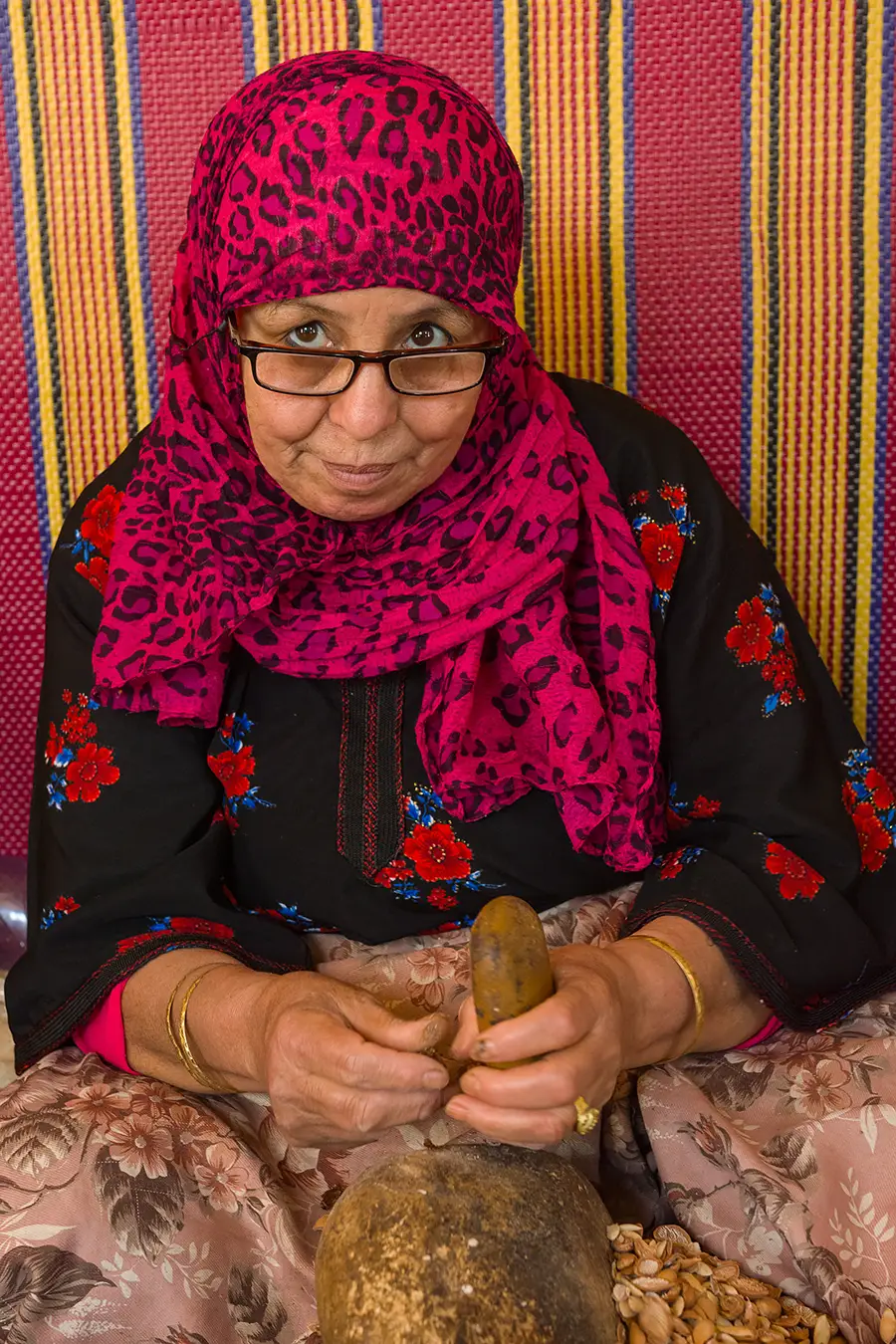
Visiting craft showrooms or workshops where locals carry out demonstrations, or in this case Argan factories where local women shell the hard argan nuts can be a really good way to take engaged portraits, as people are often fairly familiar with being photographed. Even so, you should always engage with people, and seek their permission before taking any pictures, so that you can take empathetic portraits without causing any offence.
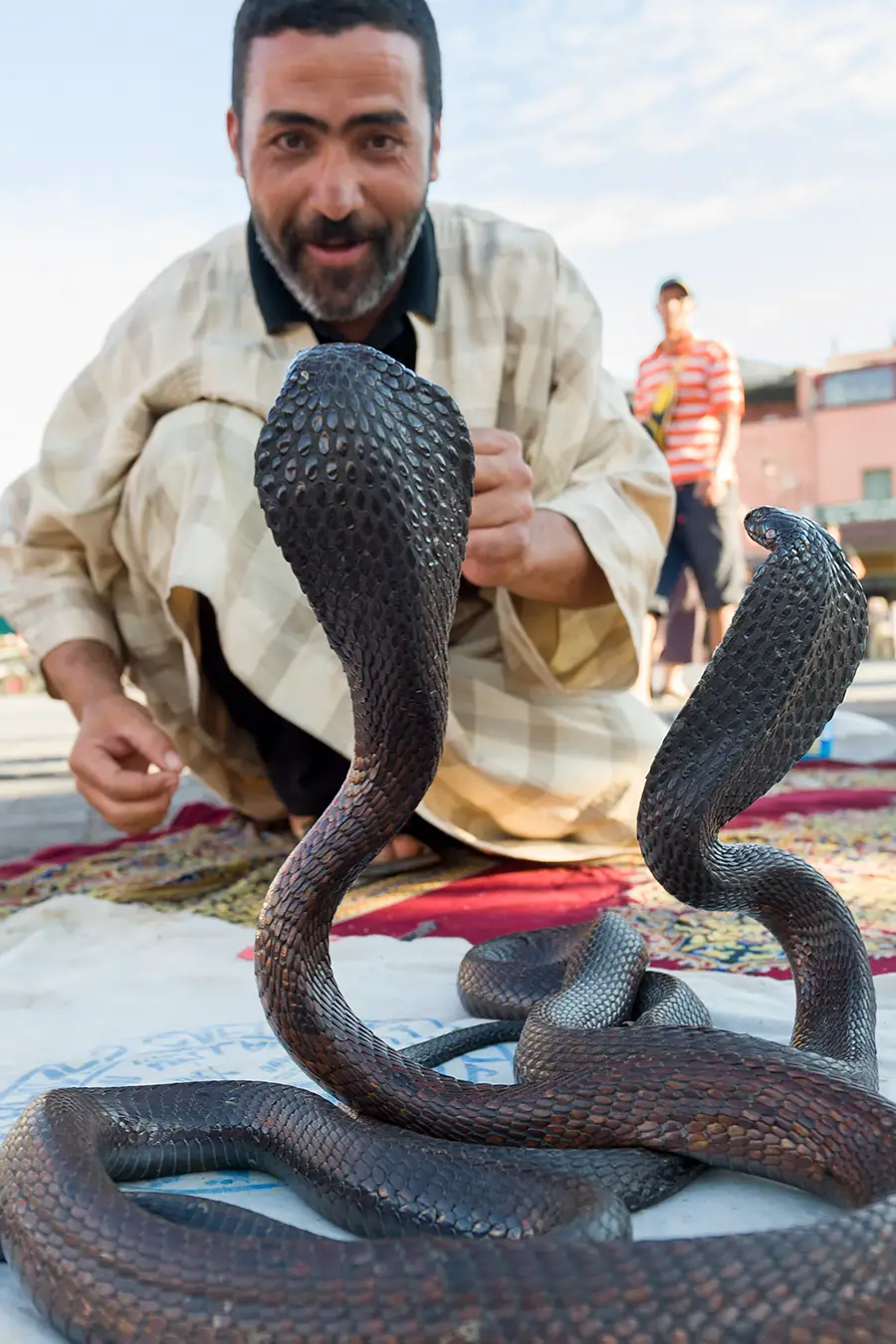
When you take pictures of people in Morocco, then try to compose your picture so that you can show something about your subject and what they do. Before you approach your subject, pause, observe, and assess what you want to show about them and what will be the best way to show it. This will include the angle, and what focal length you will need. Once you have worked out what your picture will look like, prepare the camera before you approach them.
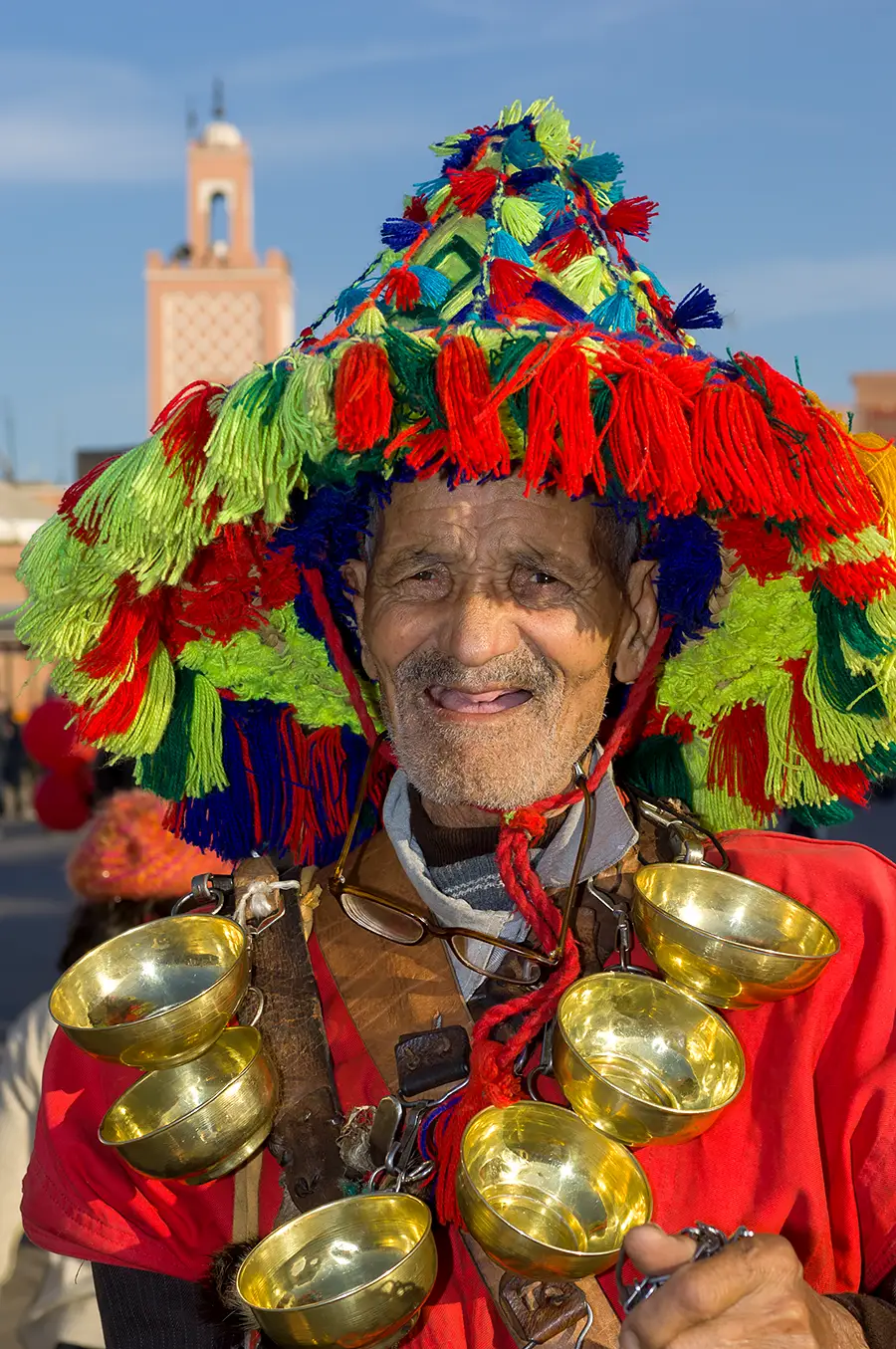
Sometimes in Marrakech you will just have to pay for pictures – especially in the Djemaa el-Fna main square where water sellers, musicians and snake charmers will be there to entertain and intrigue. In these instances, all you can do is to accept that they are professionals and embrace the situation. You should still aim to shoot engaged portraits, and make sure that you have the correct amount ready to give them afterwards: you certainly won't get any change!
If you are like the idea of experiencing the culture of Morocco and putting some of these portrait ideas into practice, then why not join me, Steve Davey, on an exclusive travel photography tour to Morocco with all land arrangements and comprehensive travel industry bonding supplied by Intrepid Travel, who are one of the leading names in small group adventure travel. On this unique itinerary, I will be on hand to help you make the most of any portrait opportunities. You can see more details below, or see the tour page by clicking here.


An adventurous photographic journey through the culturally rich and historic country of Morocco: photographing dunes in the Sahara Desert, star trails over the ruined Ksar of Ait Benhaddhou, traditional Amazigh villages and granaries of Morocco's Anti-Atlas region and the entrancingly unspoilt walled town of Taroudant - hailed as Little Marrakech. We finally explore the coastal harbour town of Essaouira and Marrakech - the Jewel in Morocco's crown.